
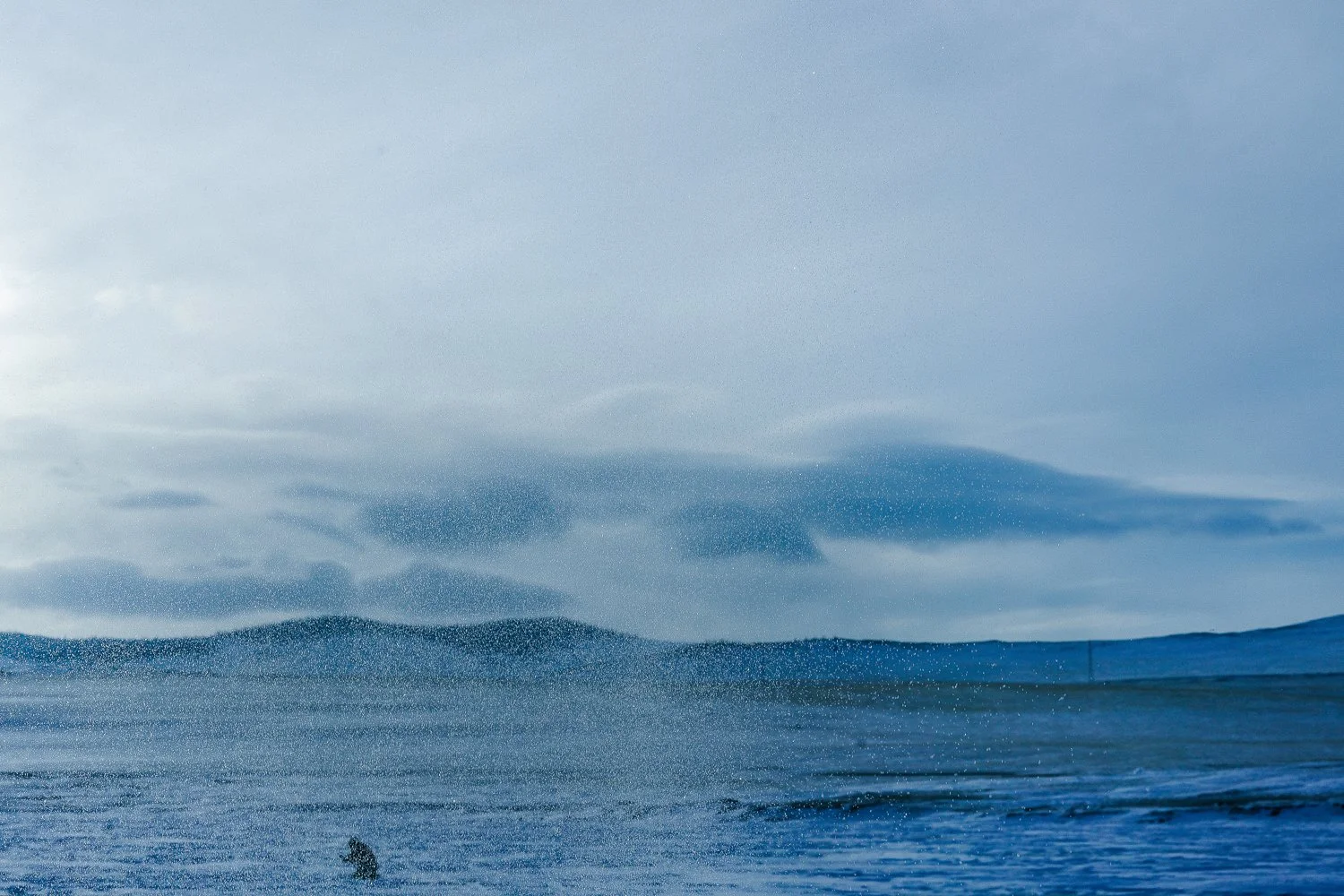
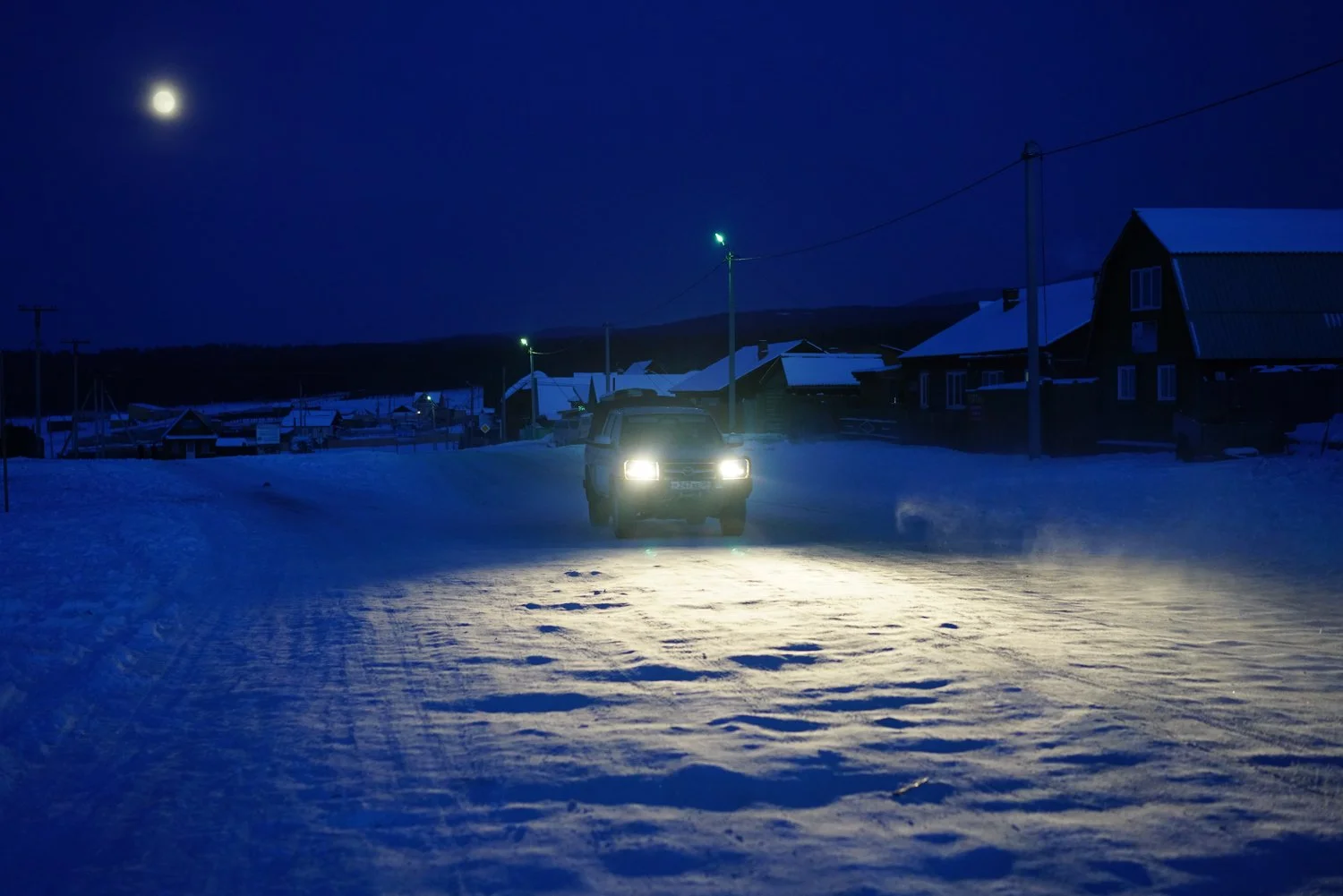
Silence becomes the most fitting form of reverence. Aside from a few distant barks, the only sound in the world is the sound of footsteps moving across the snow.
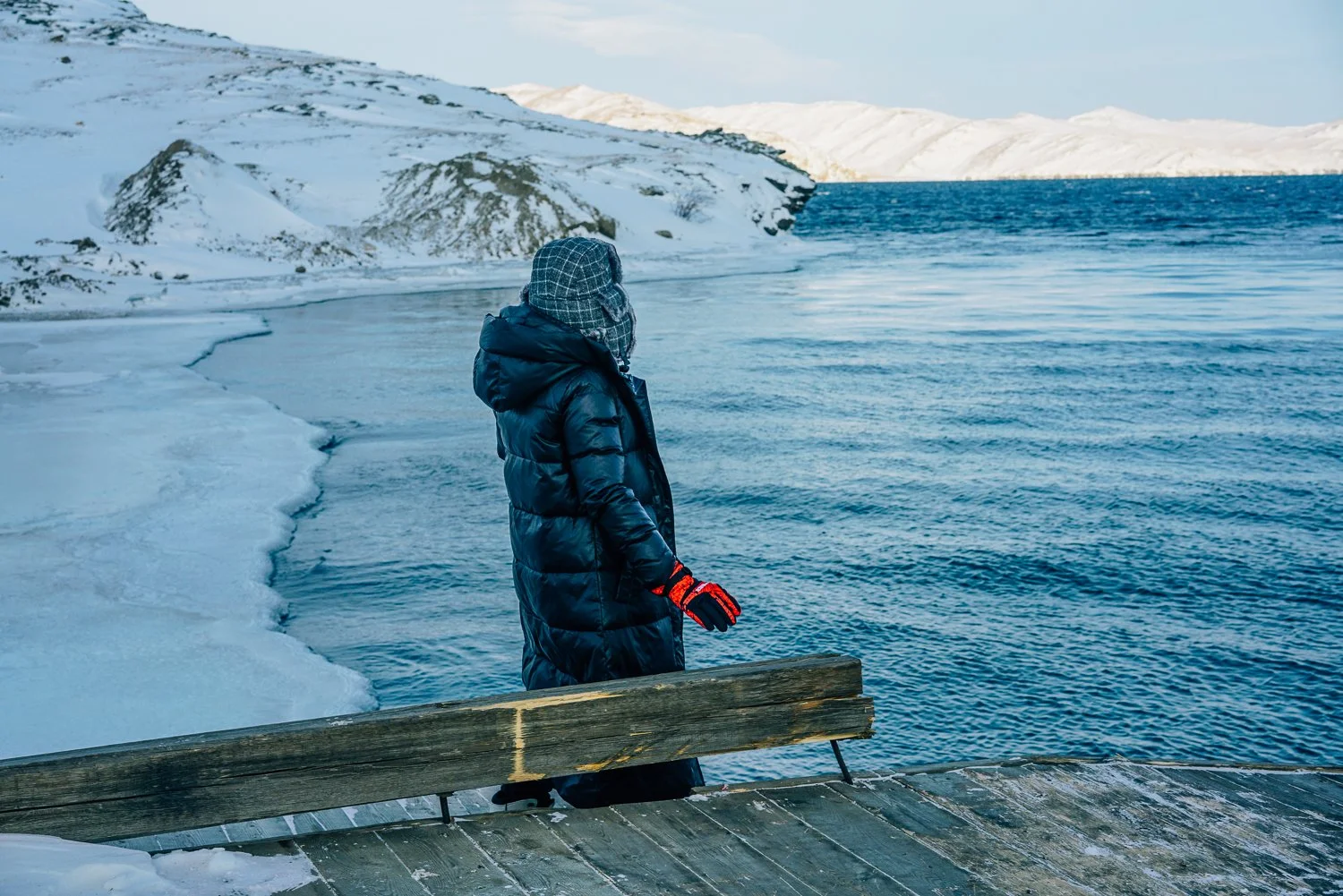
When the gaze lingers long enough, the boundaries between mountain, lake, sky, and earth begin to blur.
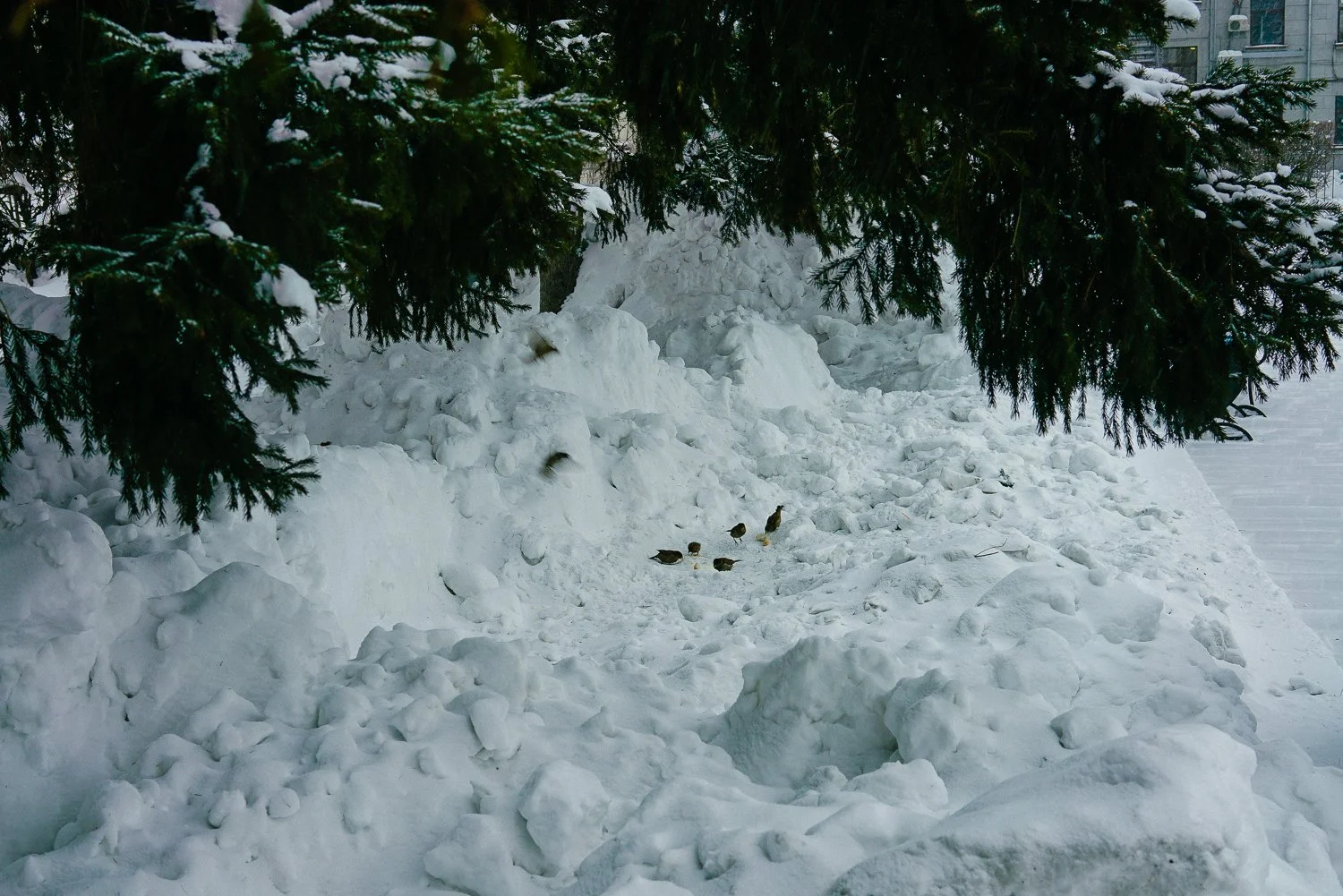
We almost forget time itself. Heavy snow engulfs everything.
Written in January 2018
沉默是最好的敬畏方式。
除了几声狗吠,世界唯一的声音,就是行径在雪地上的声音。
当凝视地久了,山与湖与天地的边界开始模糊。
我们也几乎都忘记了时间。大雪把一切都淹没了。
写于2018年1月



Lake Baikal : The Icy Heart of the Tea Road
January 4, 2018 · 7 min ·DAI Xianjing
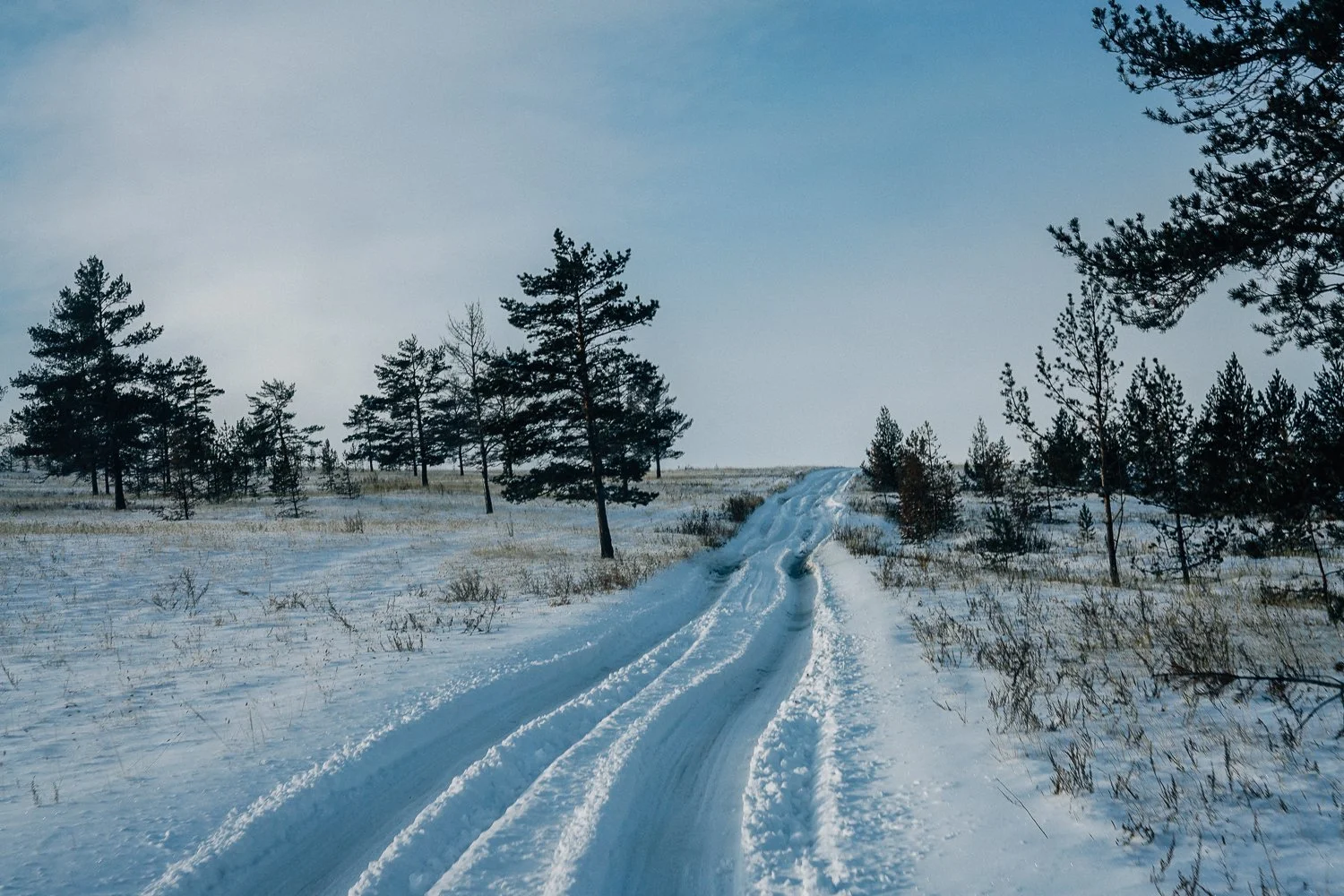
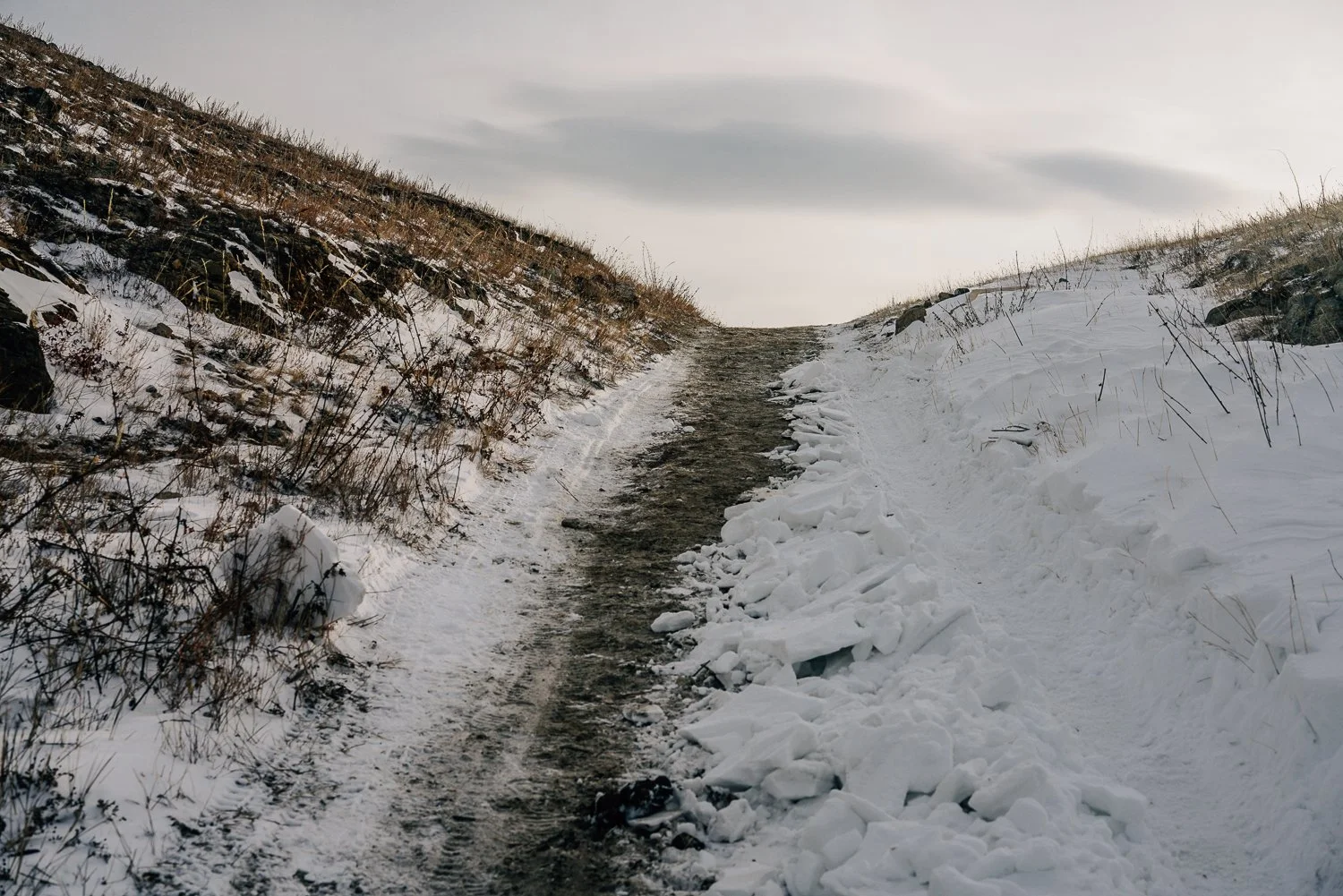
At the turn of the year in 2018, I found myself driving along the ancient Tea Road by Lake Baikal. (The Sino-Russian Tea Road, or "Wan Li Cha Dao" (Tea Road with 10,000 miles), was a 13,000-km-long 17th–20th century trade route connecting Wuyi Mountain in China’s Fujian province to Moscow/St. Petersburg via Mongolia. It served as a major commercial artery for exporting Chinese tea and other goods to Europe. )In the depths of winter, at minus thirty degrees Celsius, the frozen world held a peculiar allure for someone like me from the south. In the distance stood lonely, resilient mountain ranges; deep blue lakes; faintly visible roads buried under snow; and aurora-tinted nights that felt almost hallucinatory.
My flight to Irkutsk transferred through Beijing. At 11:30 p.m., the air there was still thick with smog, and the airport looked much the same as it always had. Minus five degrees in Beijing was just enough for me to sense the cold piercing my skin. The airport at night was quieter than during the day, so quiet that every boarding announcement sounded unusually clear—detached, unpersuasive, as if making no attempt to hold anyone back. Different destinations briefly gathered people together, only to scatter them again moments later.
I imagined that soon I would be surrounded by all kinds of dialects and languages. Closing my eyes among strangers, I wasn’t sure whether I would be able to sleep—but it didn’t really matter. Those who choose to set out rarely worry about exhaustion. The cost of wanting to understand the world, beyond money, is paid with one’s own body. Train it enough, and it toughens up.
To reach Lake Baikal, one must first land in the nearest city—Irkutsk. The flight from Beijing departs at 5:30 a.m. and takes about three hours, with no time difference.
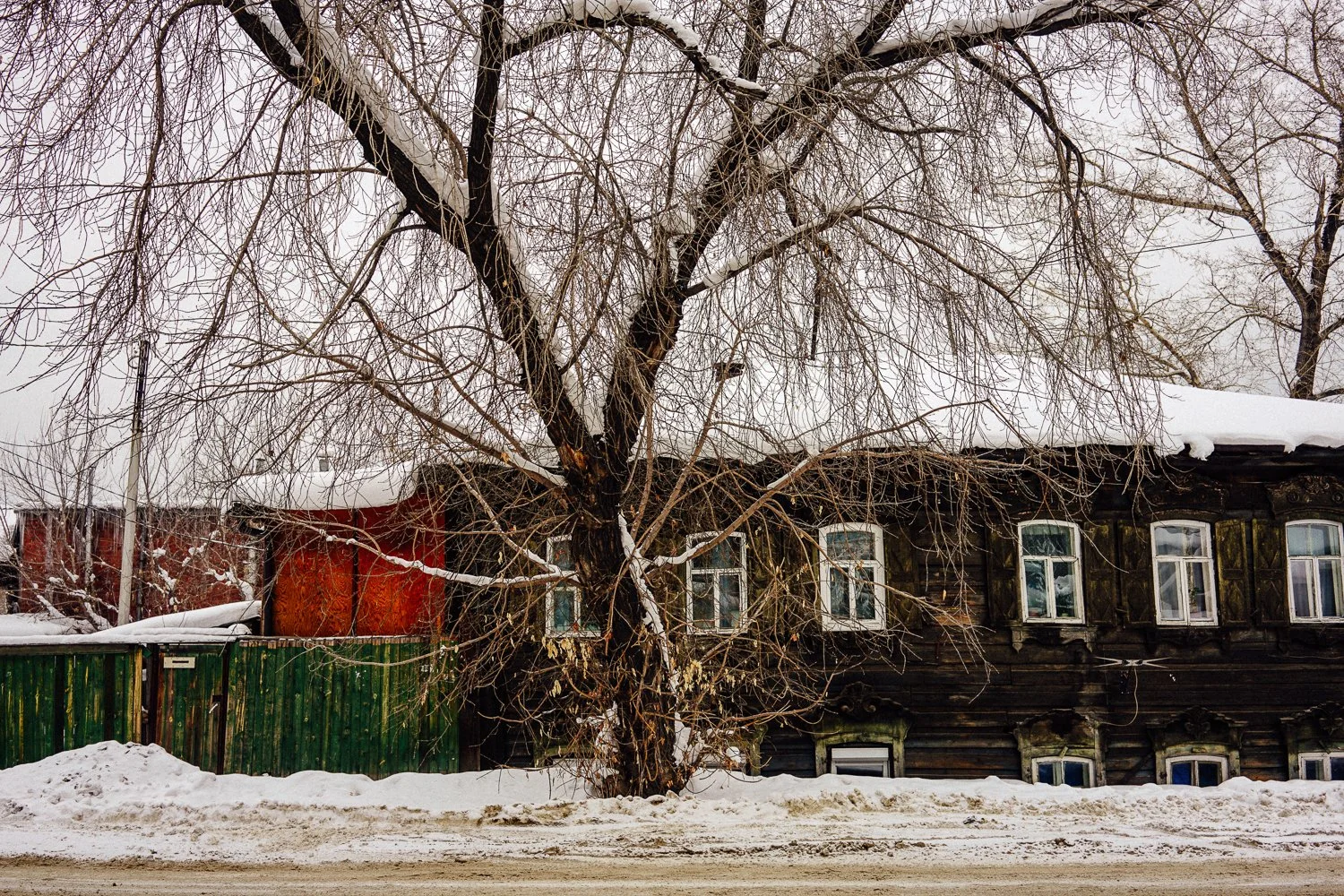
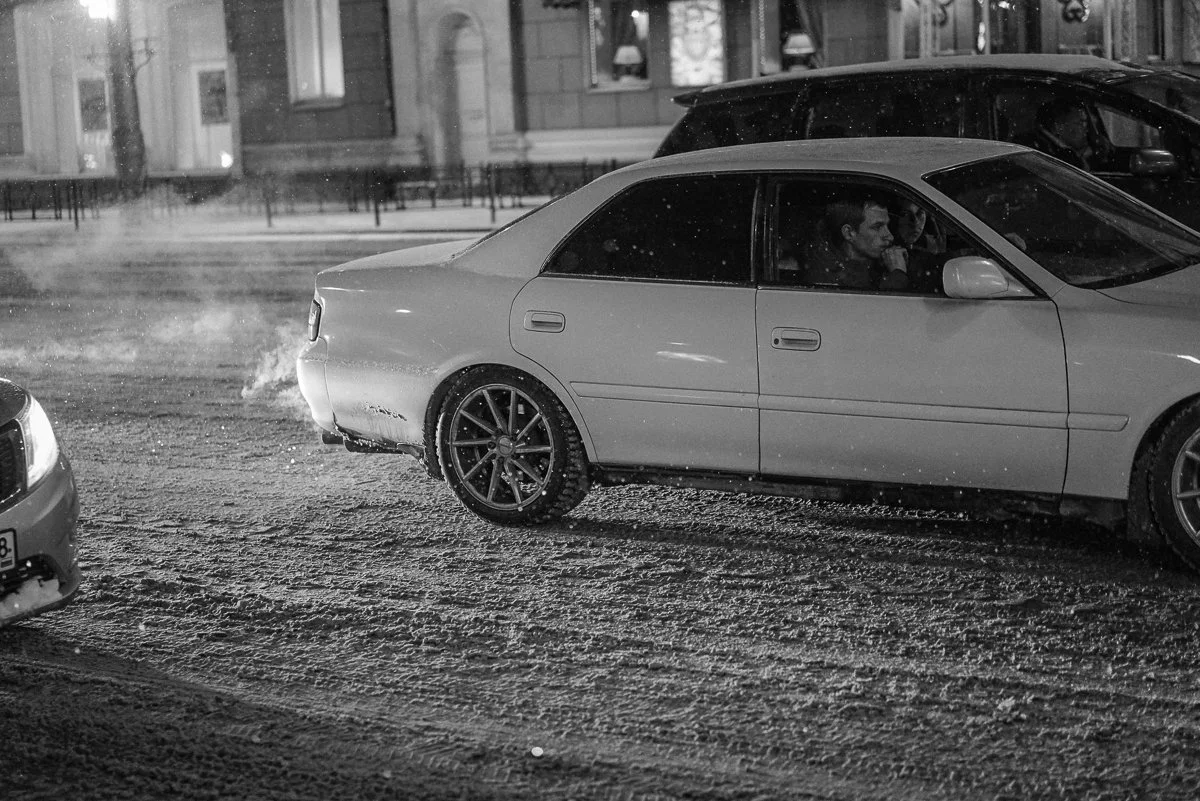
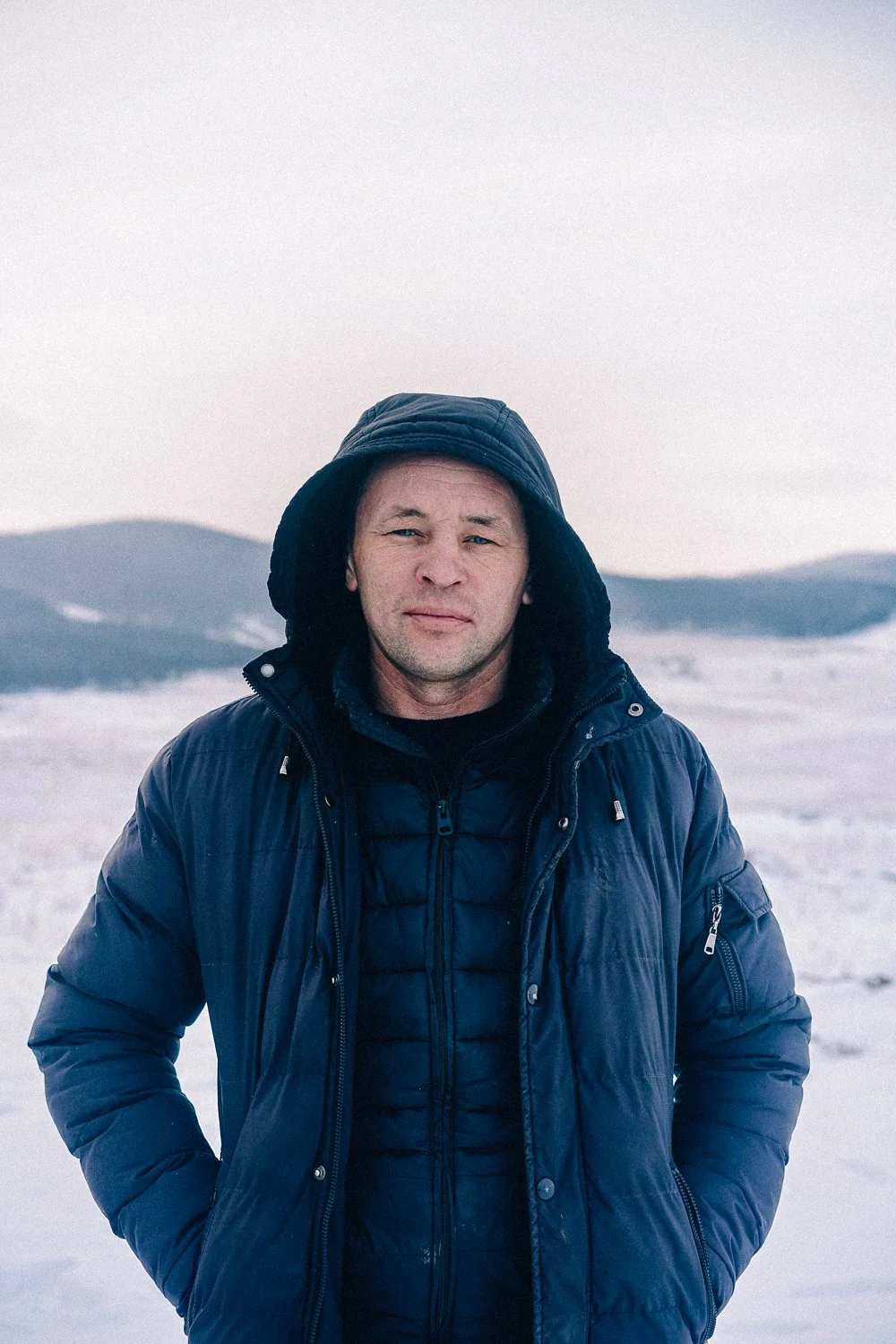
The Russian spoken by the airport taxi driver felt mysterious and impenetrable; we communicated through gestures and the meter. The car was a Honda, with a few Japanese flyers stuck to the rear window. There was a scar on the back of the driver’s hand, but his face was handsome and delicate. When we passed a museum, he raised that hand and insisted I photograph it. Wandering through this old city on the Sino-Russian Tea Road felt a bit like stepping into a Coen brothers’ Fargo: white snow, green, brown, and pale yellow wooden houses, tall desolate trees, and exhaust trails stretching long behind passing cars. Snow on the roads had been shoveled to the sides and piled high.
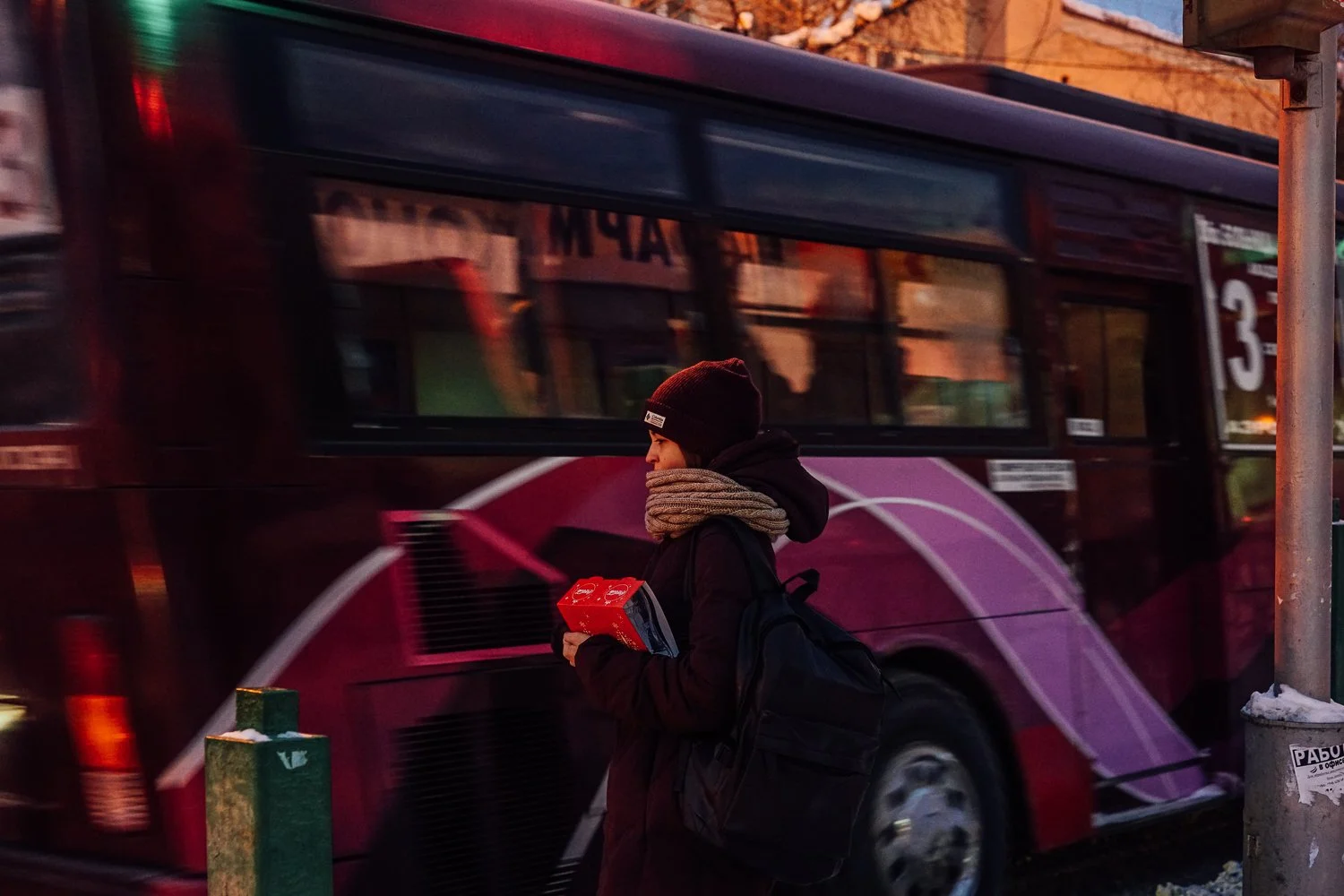
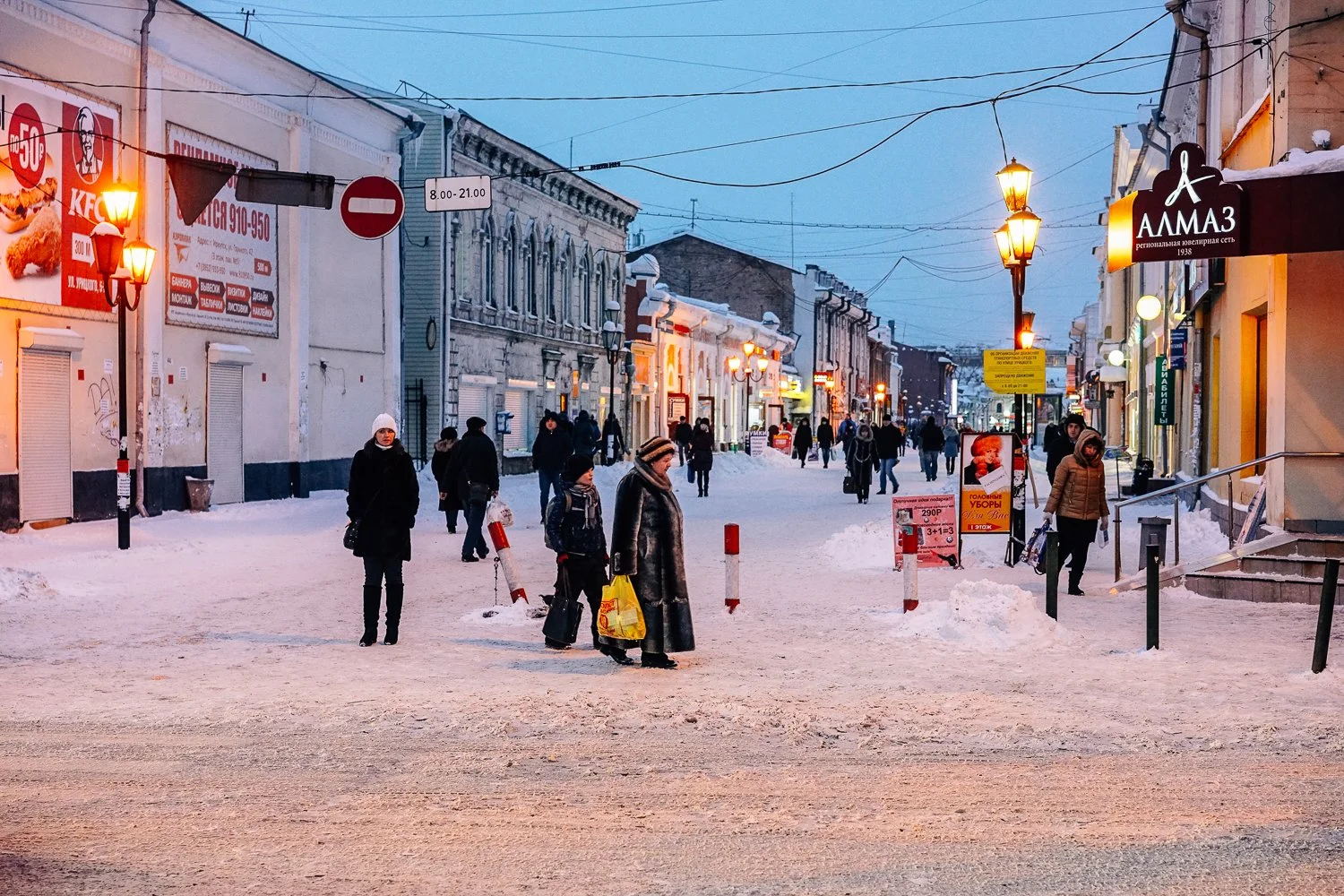
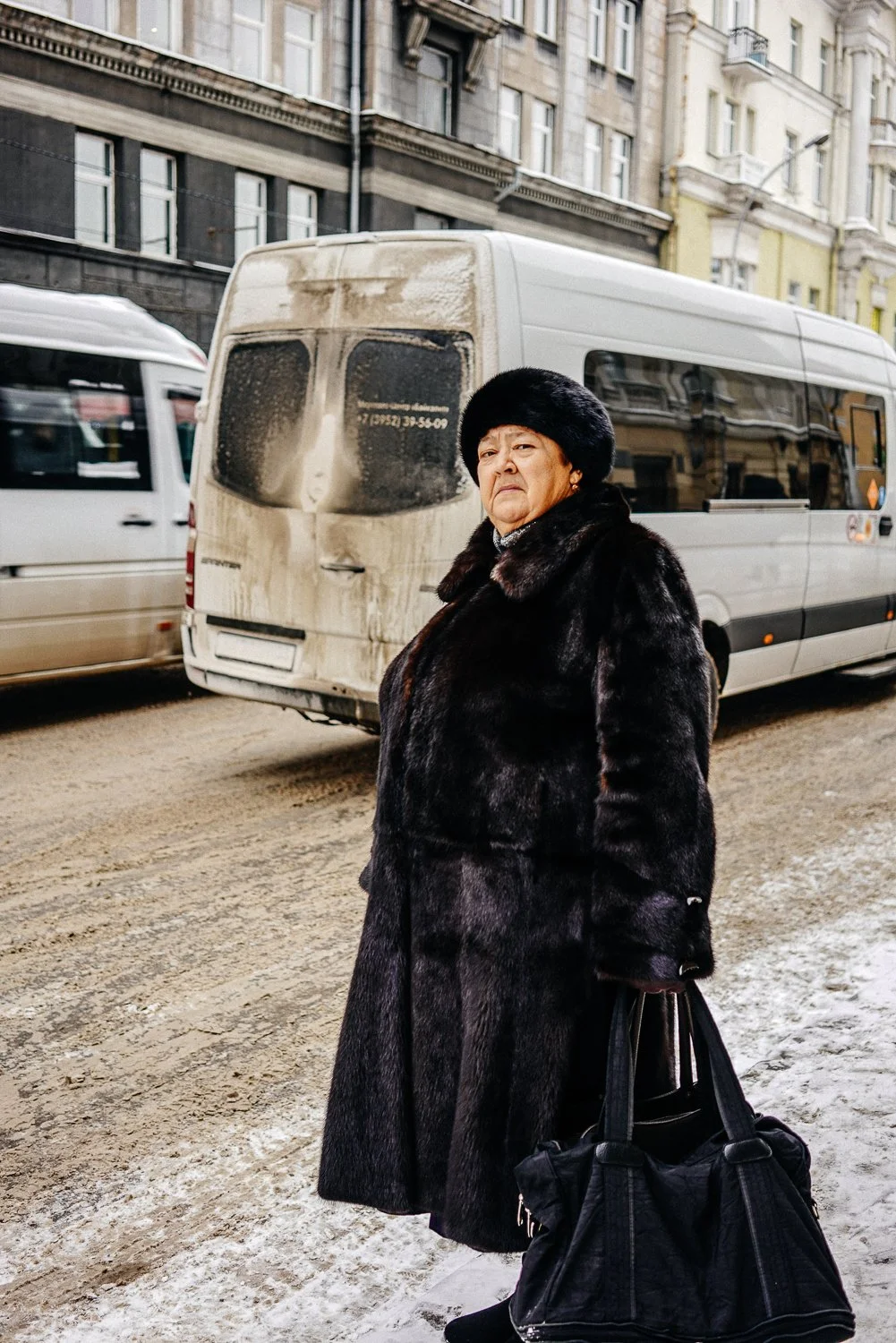
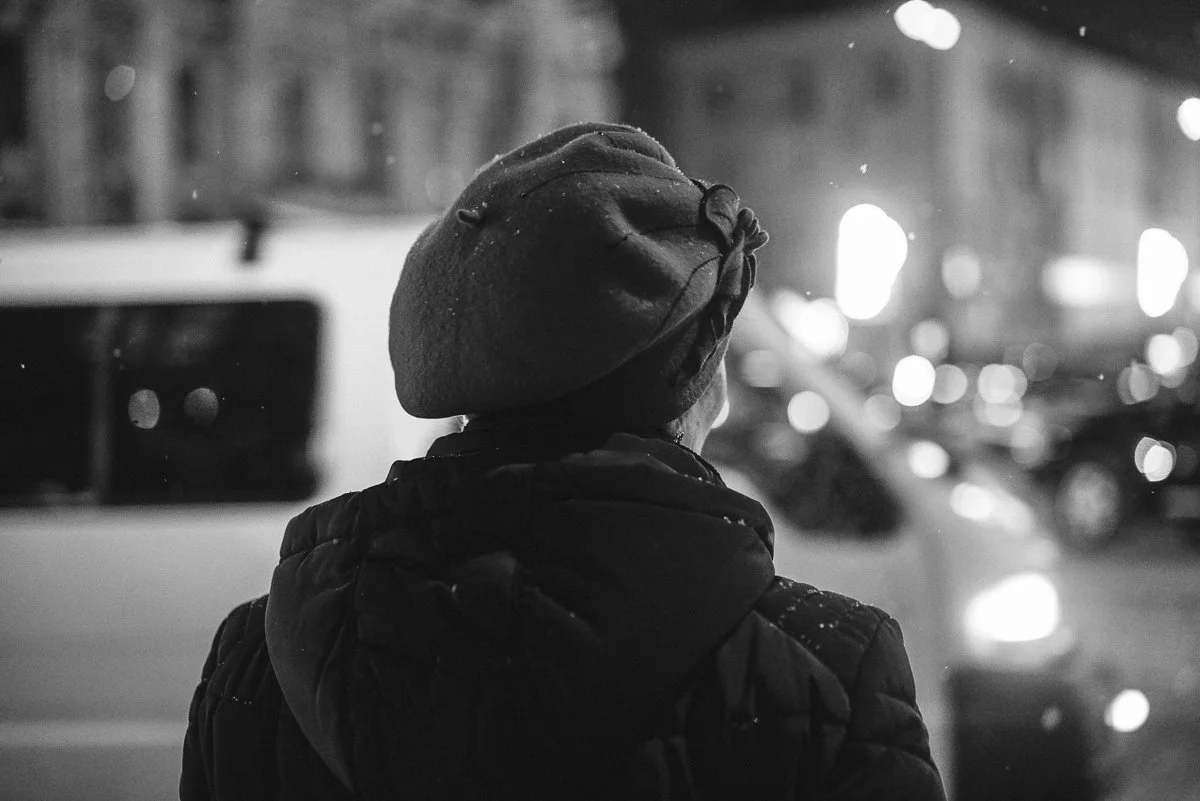
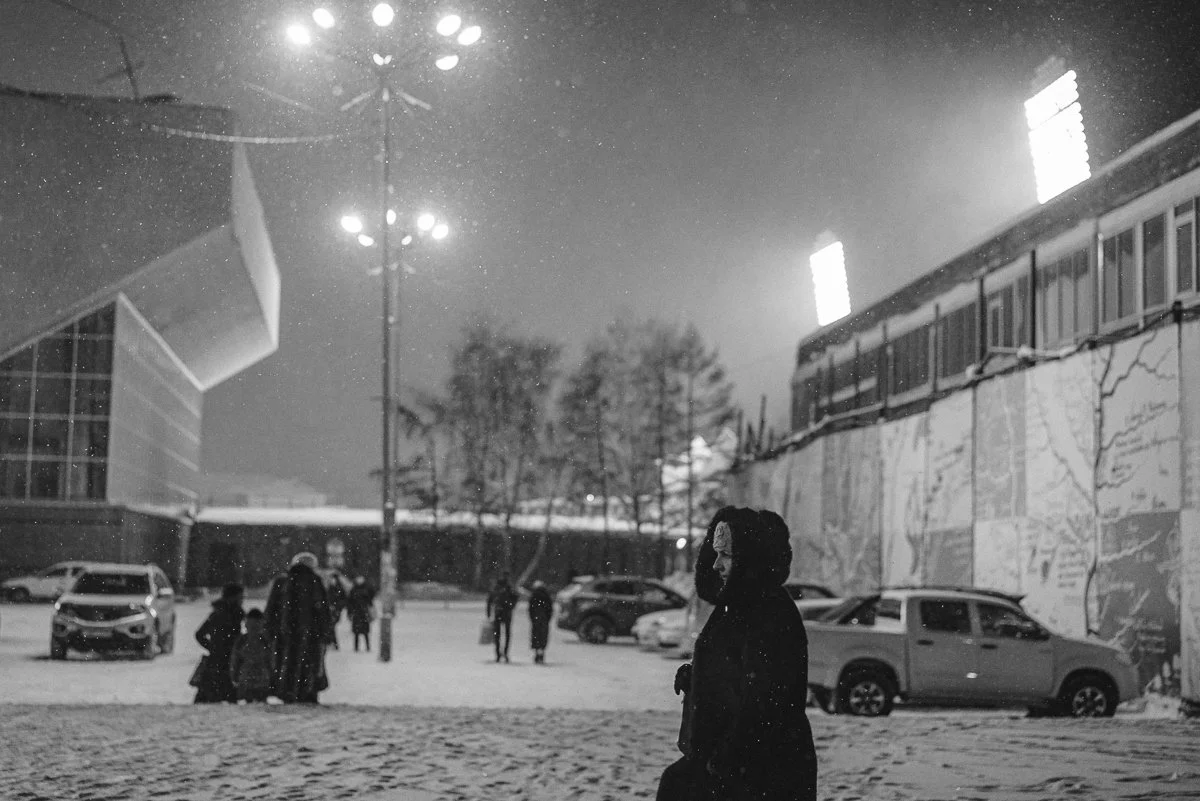
On Karl Marx Street, every few lampposts were fitted with small loudspeakers playing music with a distinctly socialist flavor from the 1990s. Old trams rolled by slowly. A group of young people skated at an outdoor rink—clear routes, steady speed, strong legs—quiet, at ease. On the streets, people had half their faces buried in fur coats and heavy overcoats. Only when women occasionally brushed back their hair or removed their gloves could you catch a glimpse of delicate, ornate gold jewelry. Their bright red lipstick and heavy perfume stayed with me. Their expressionless faces carried a kind of mechanical silence that felt strangely familiar.
By chance, I passed through a market where people were selling frozen seafood—different kinds of sea fish, stiff and enormous, laid bare in the open air. They looked like the people here themselves, tightly wrapped by history and cold.
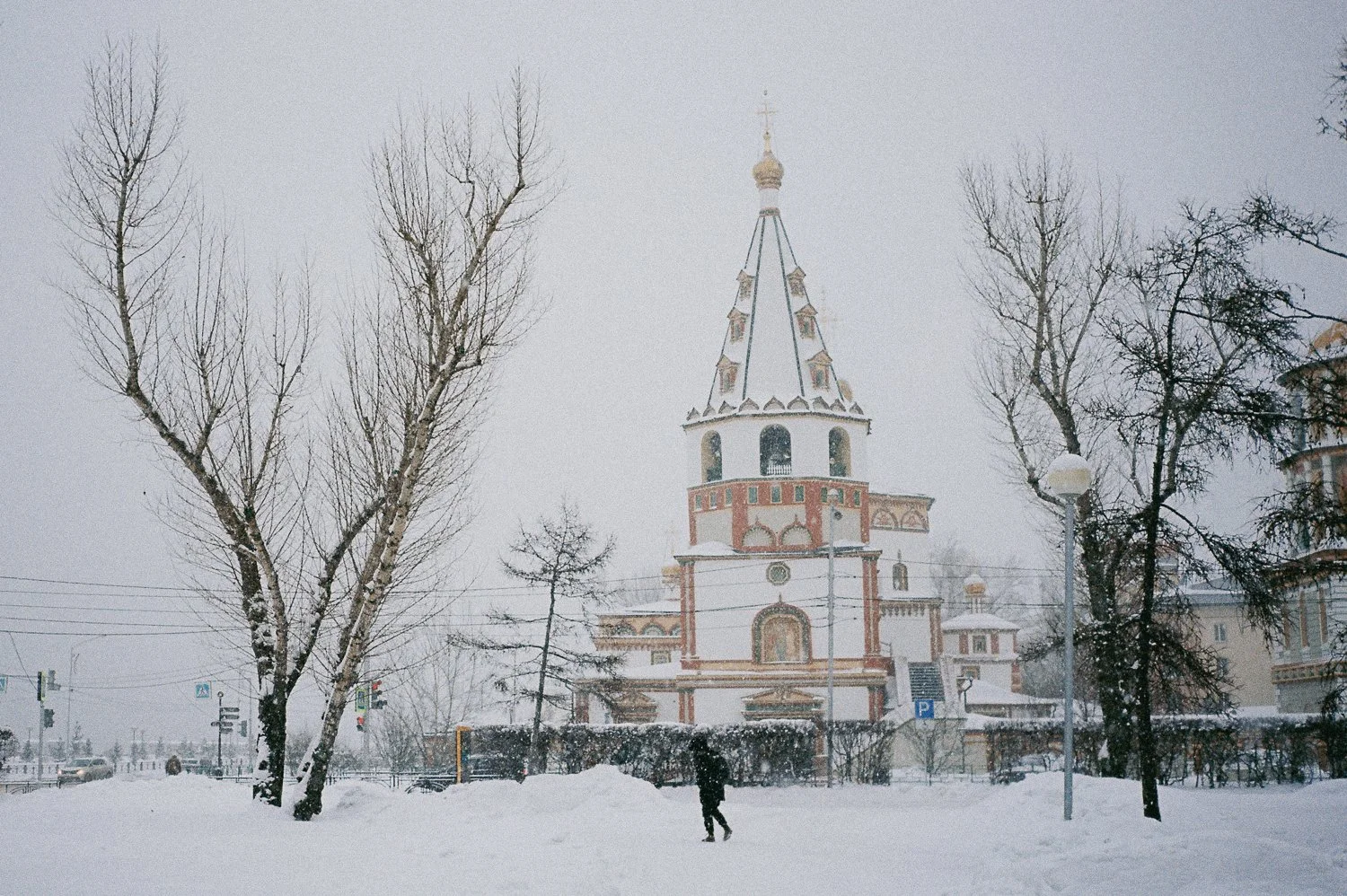
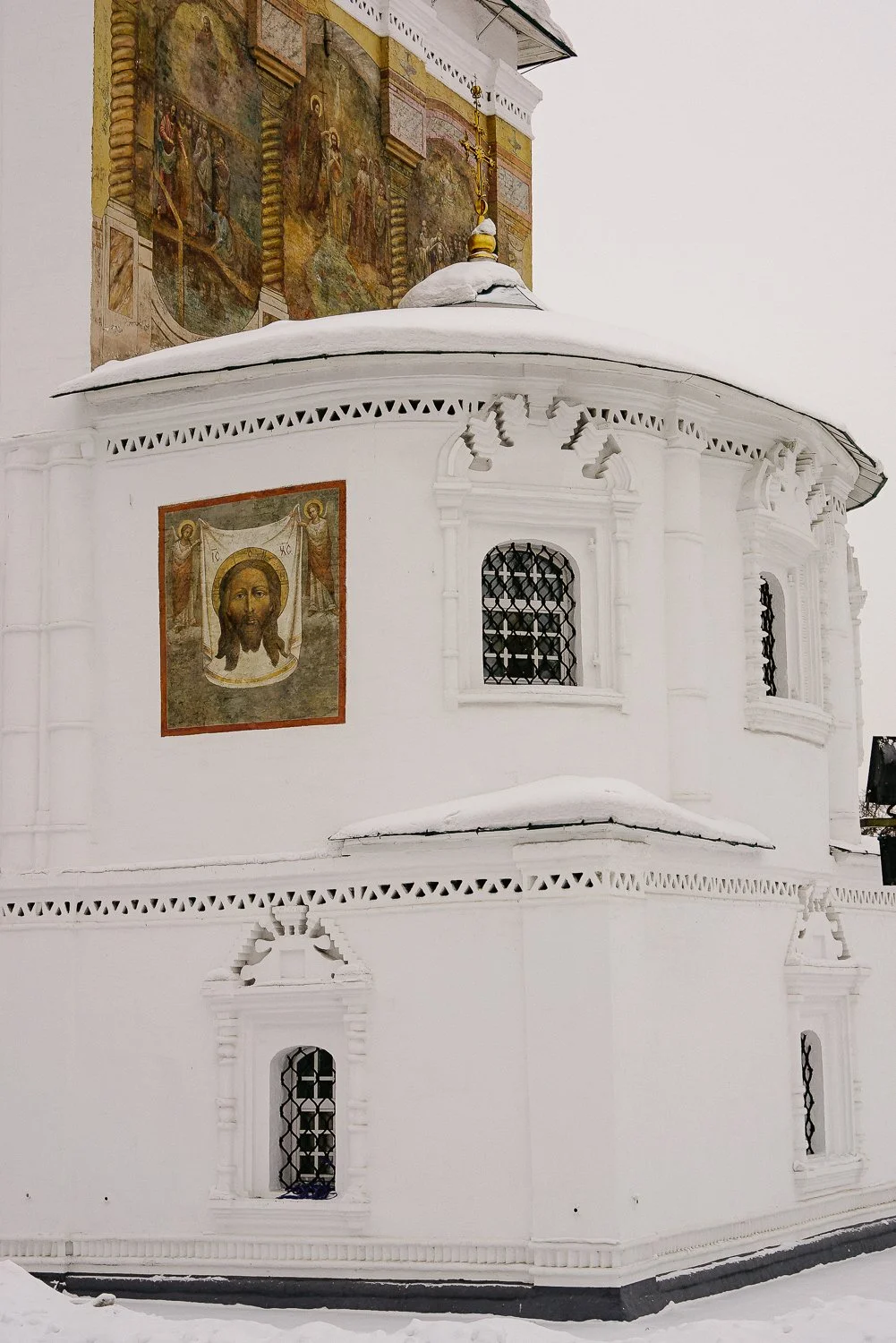
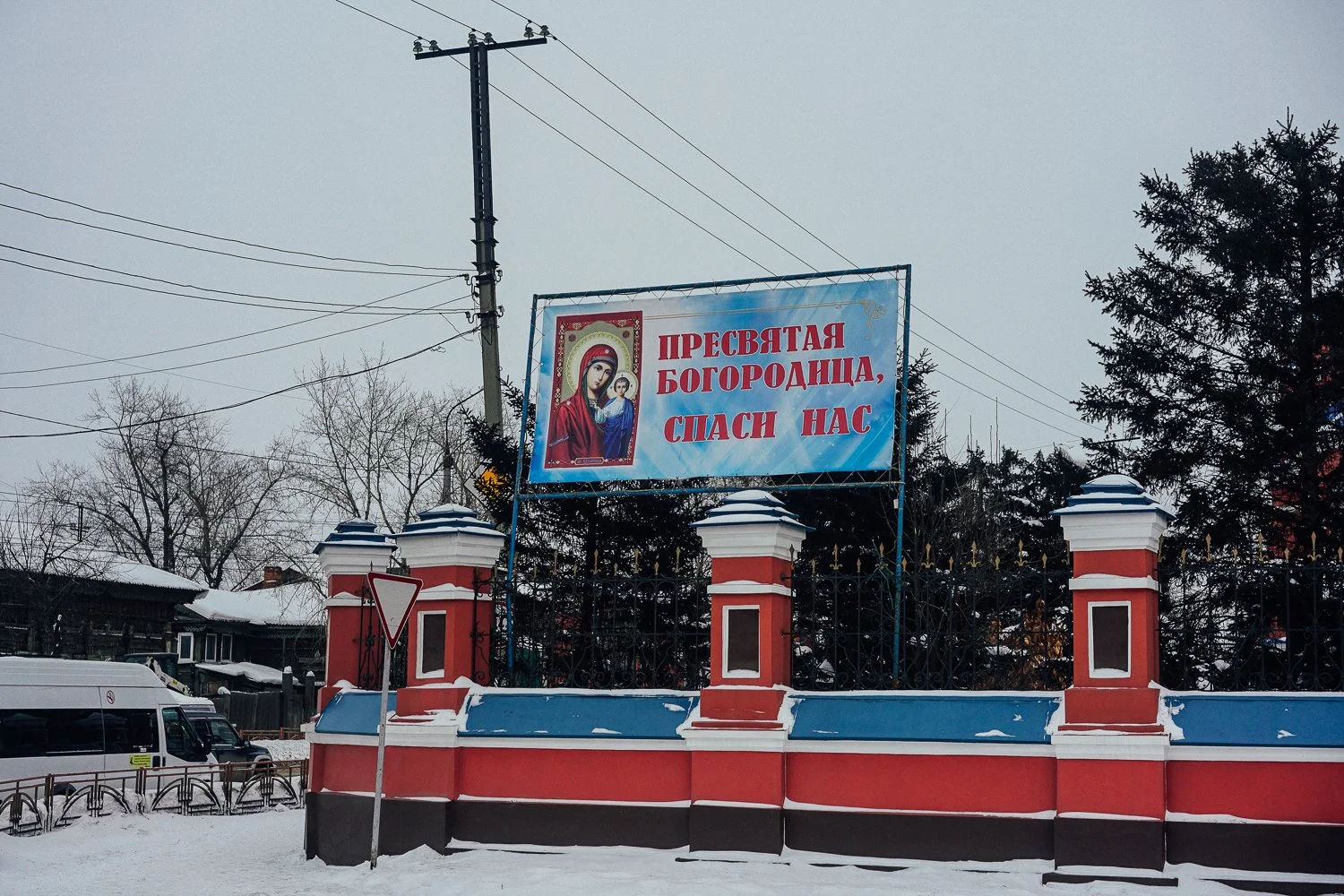
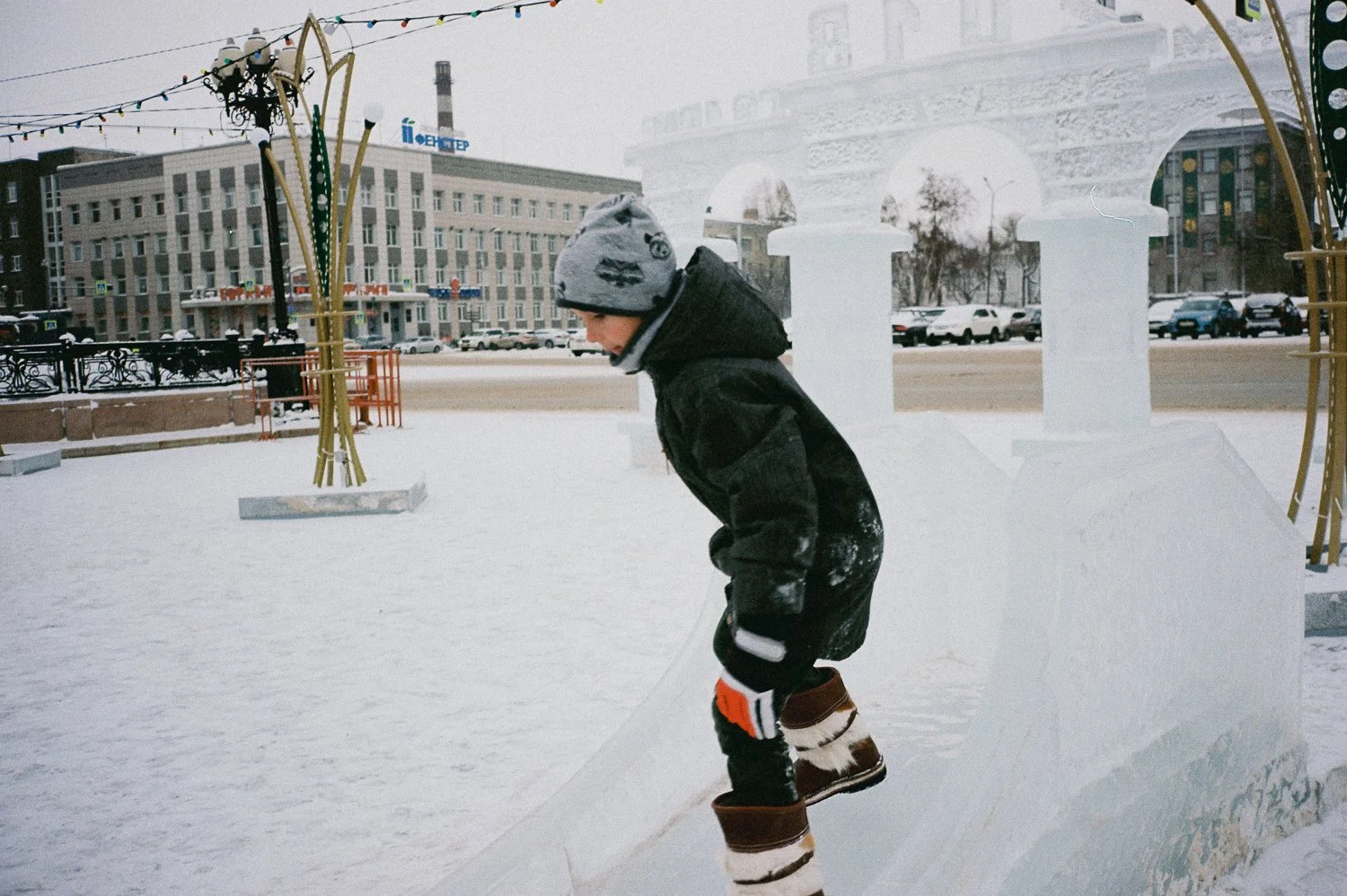
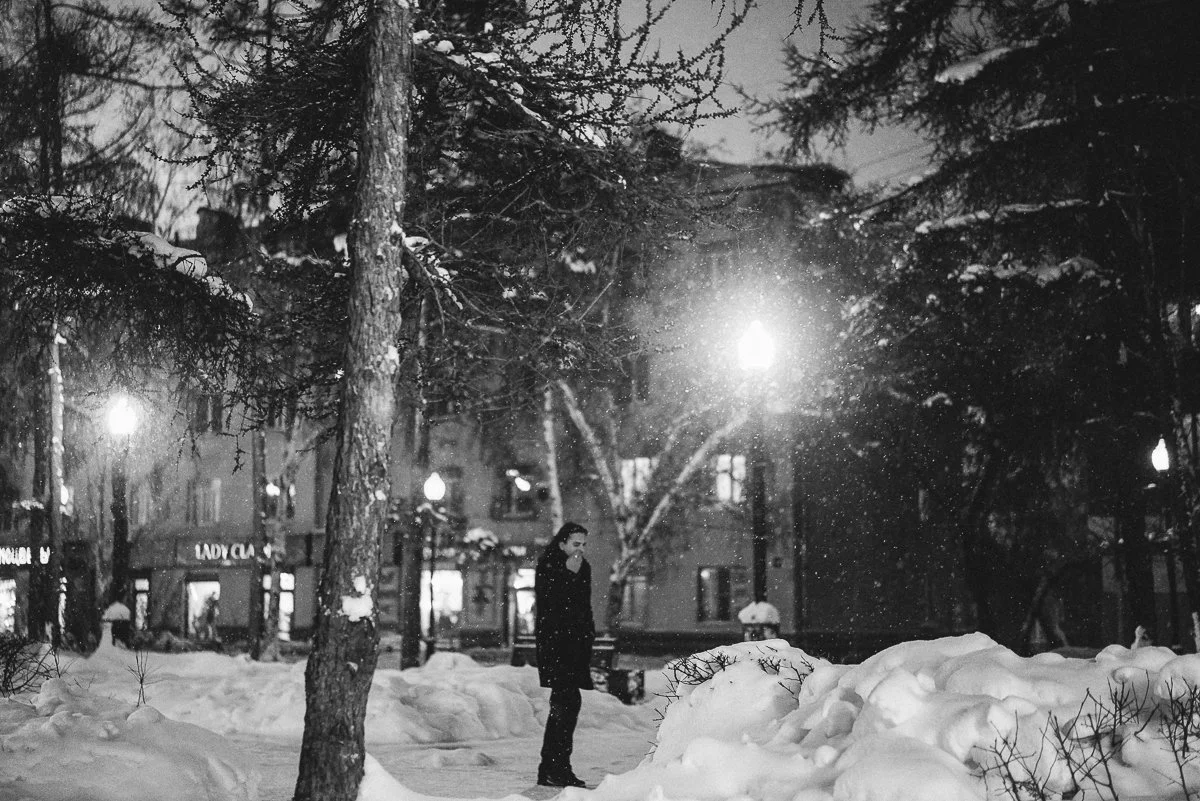
The city is embraced by the Angara River. At its heart lies Kirov Square, where a giant Christmas tree stood. Children were playing on tall slides, some made entirely of ice. They shouted and ran, seemingly oblivious to the cold. This was a playground belonging only to northern children—one that children from the south could never have. Walking north from the square brings you to the Lenin Monument, and further north, several Orthodox churches in different styles.
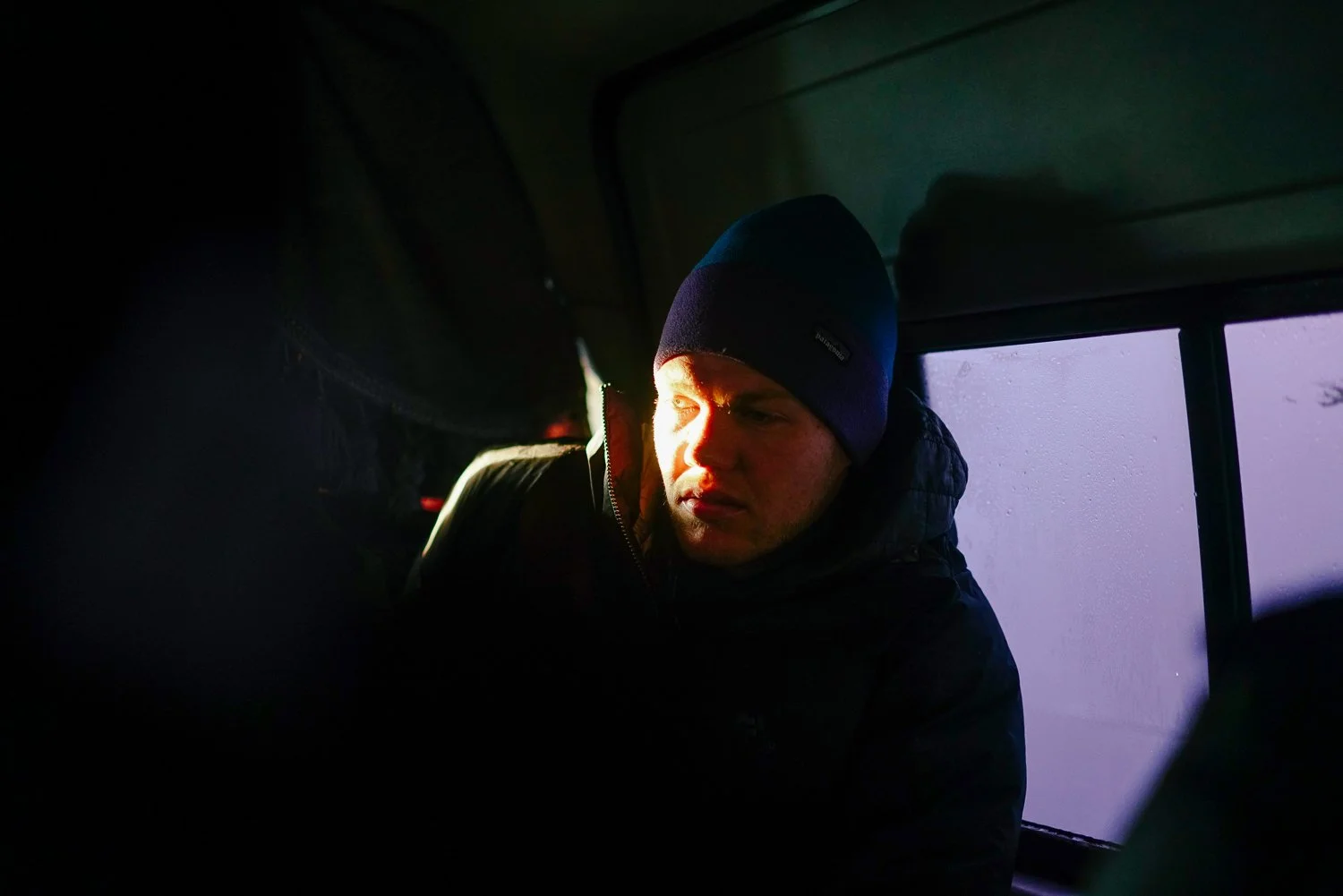
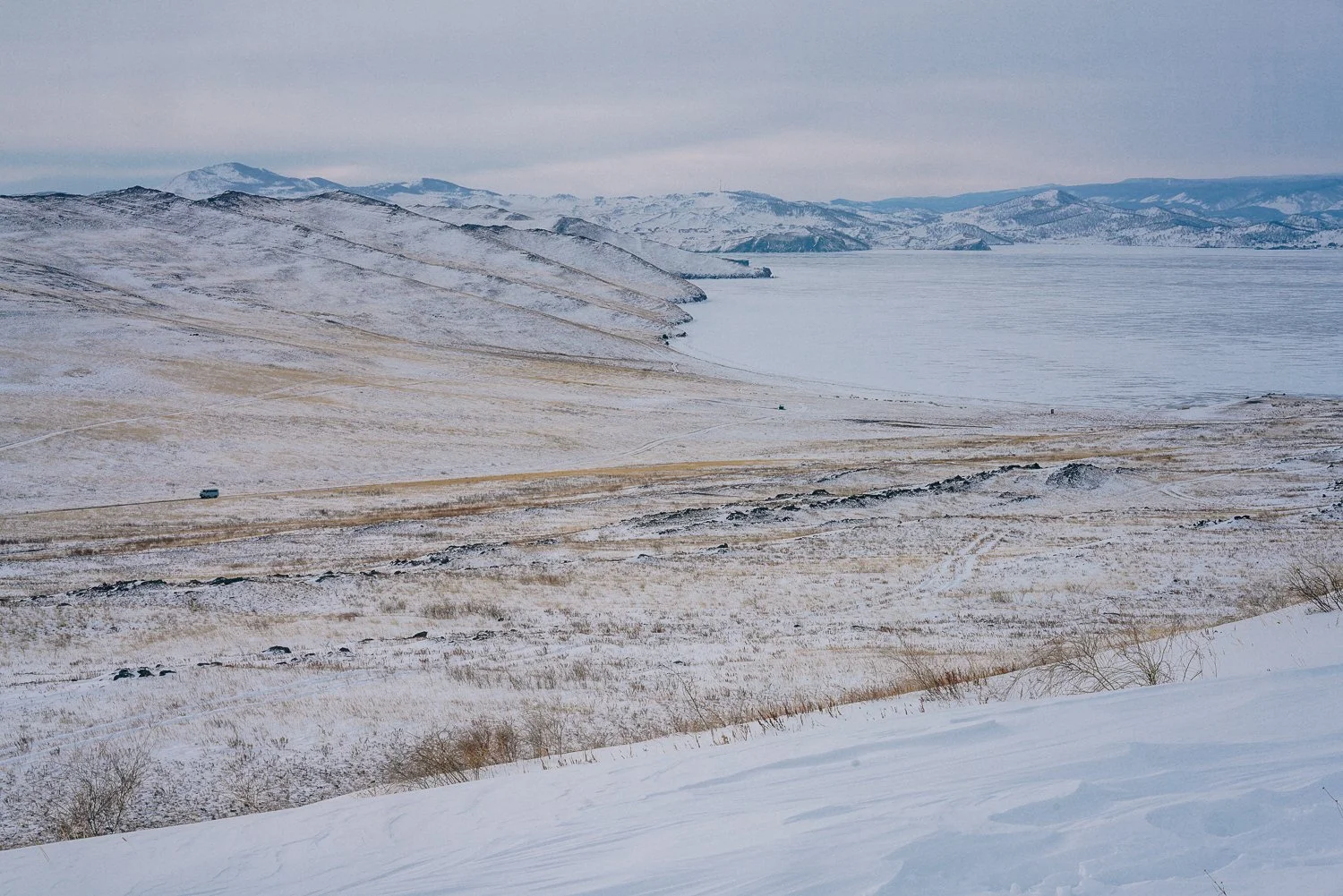
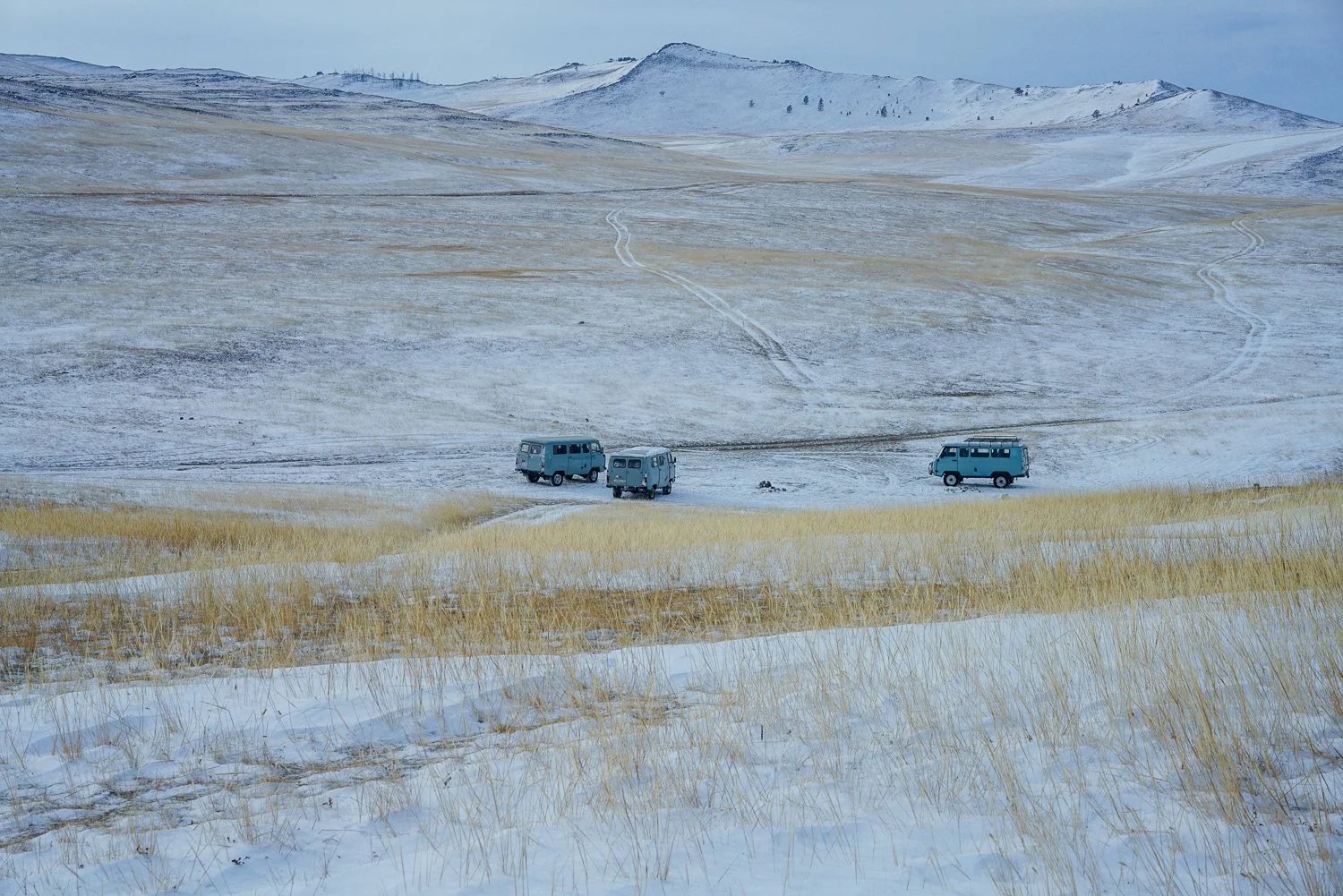
The next day, I set off for Lake Baikal. The drive from Irkutsk to Olkhon Island takes about six hours. Olkhon lies at the center of the lake, and Khuzhir, its main village, is home to around 1,500 people. Along the way, we stopped twice. The first stop was at a rest area by the roadside, with only a few wooden houses and very little traffic. The two-lane road stretched straight ahead, seemingly without end.
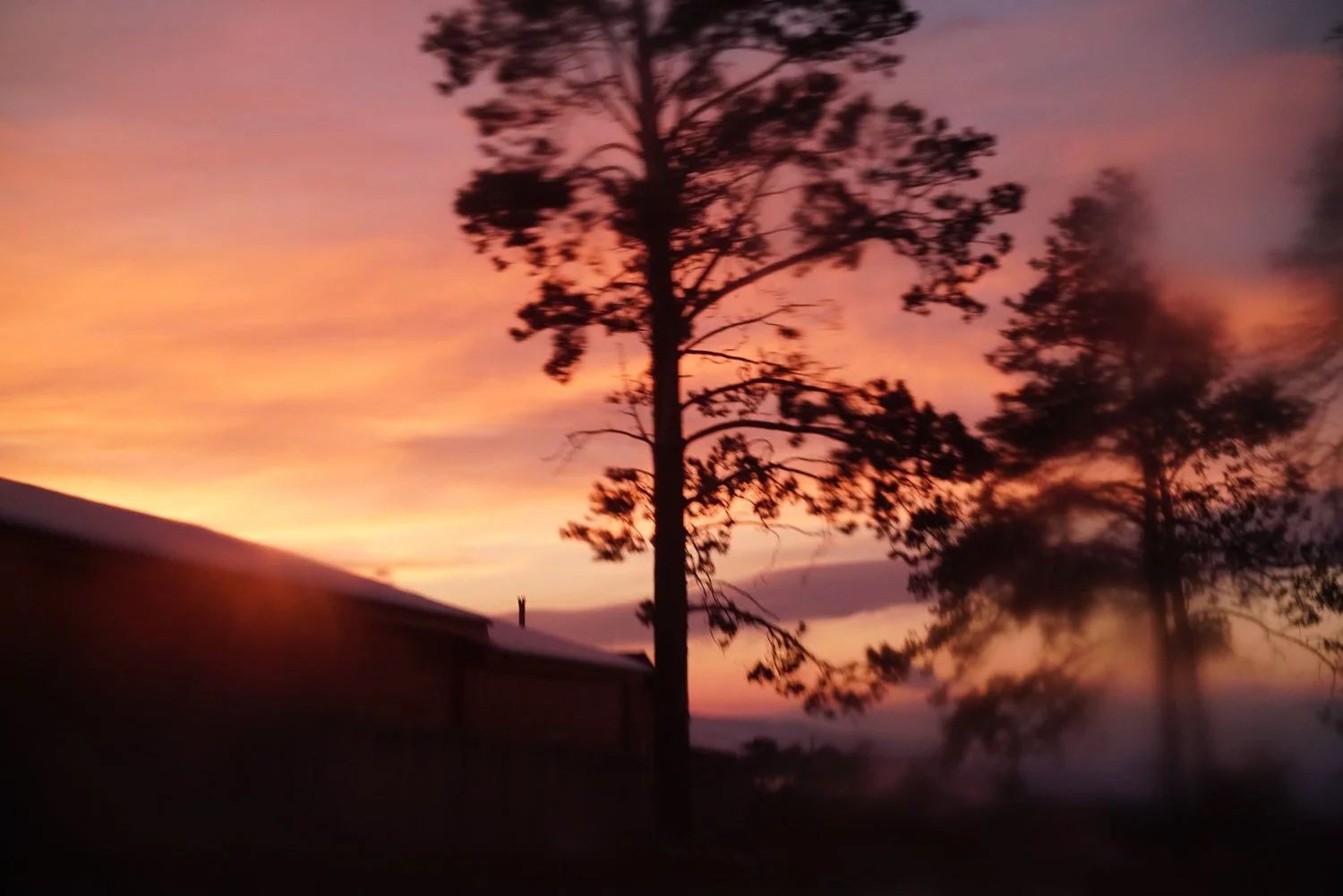
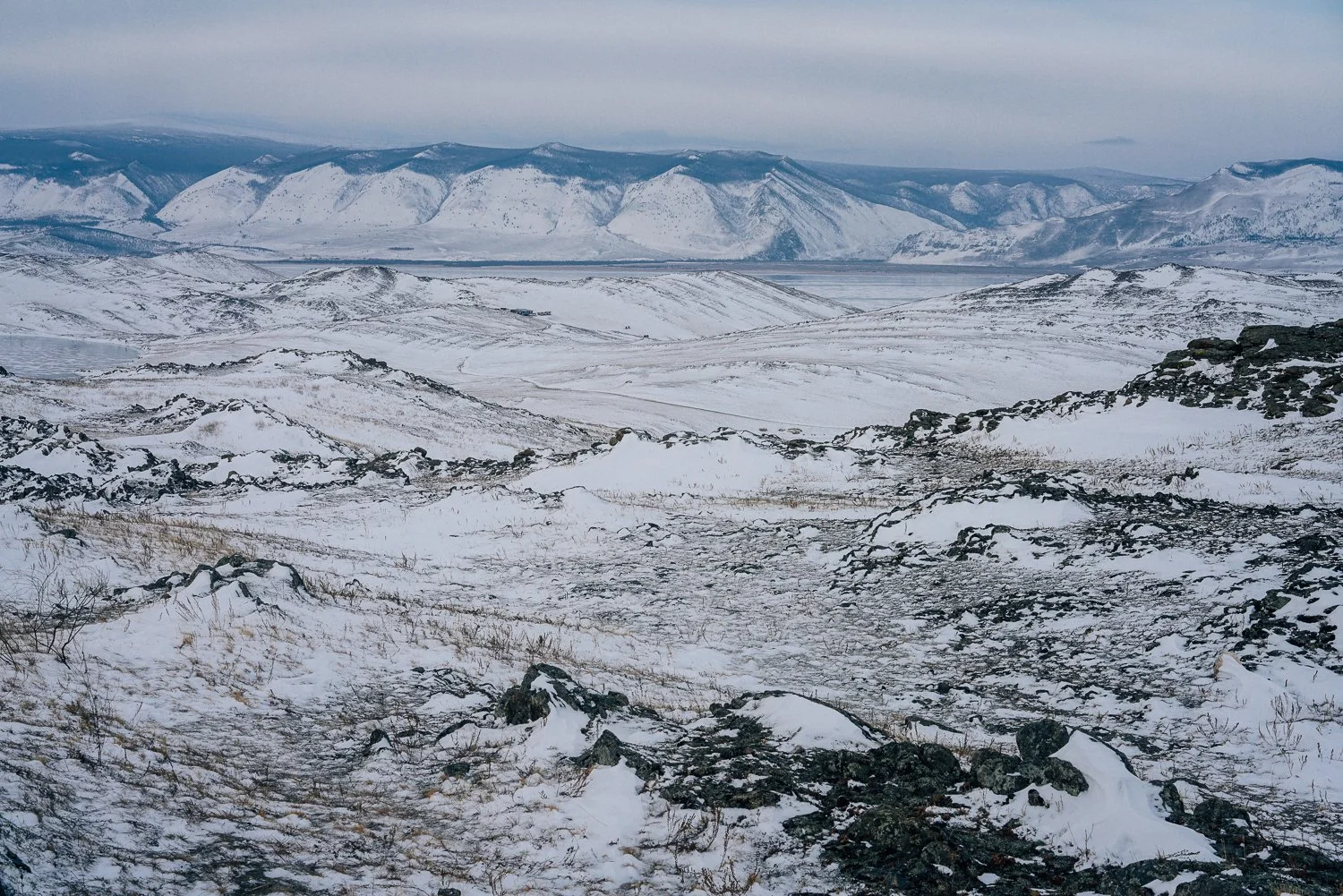
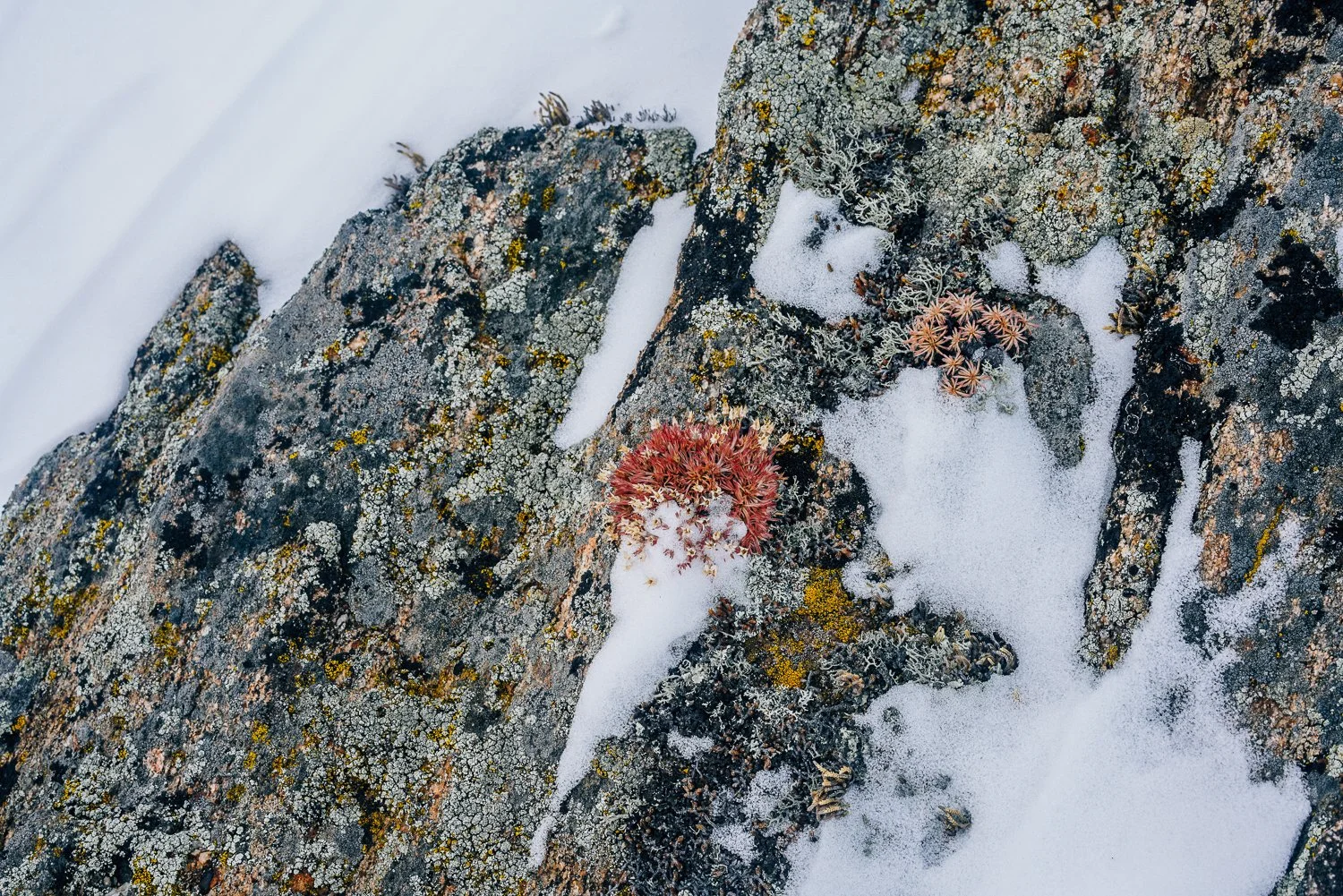
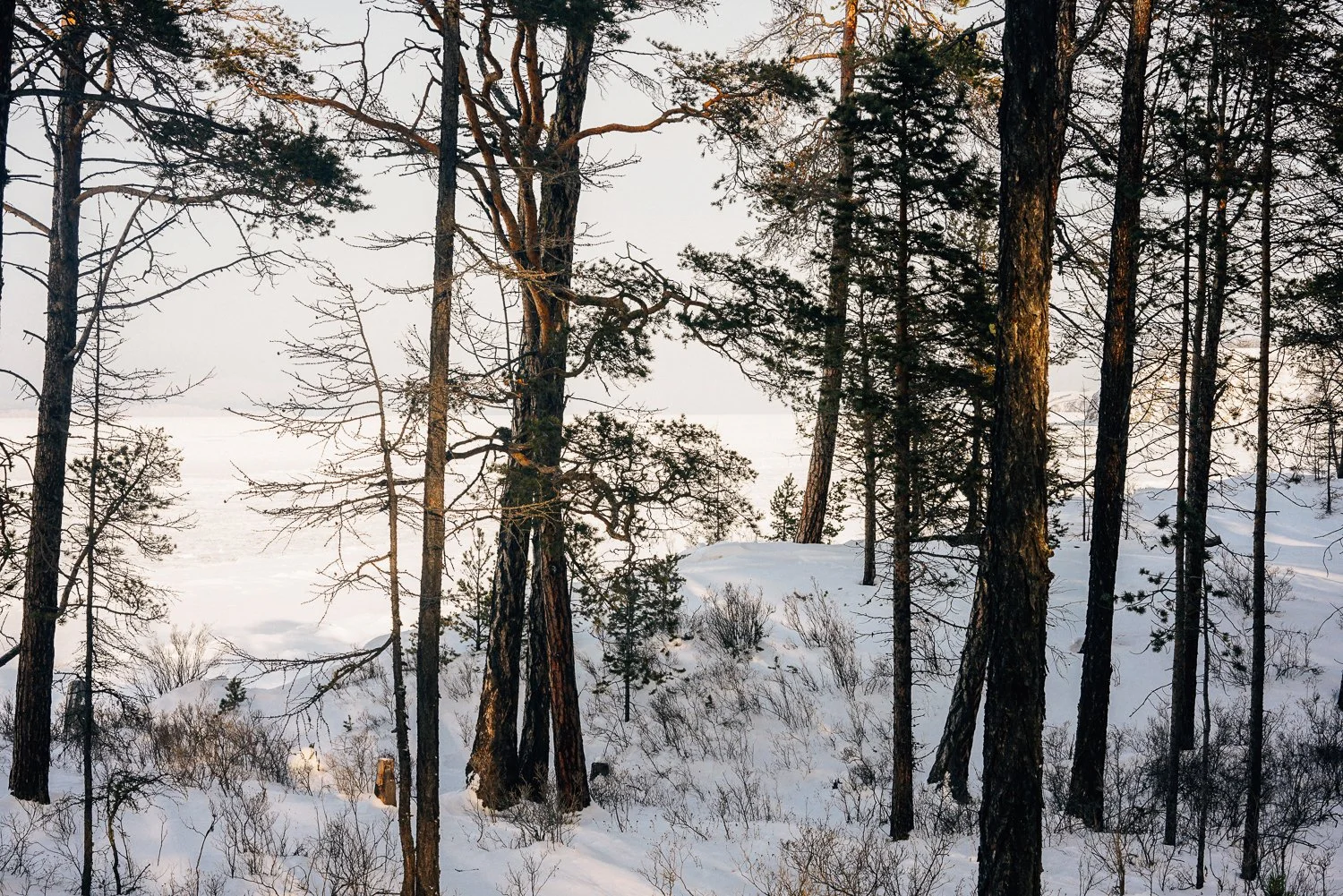
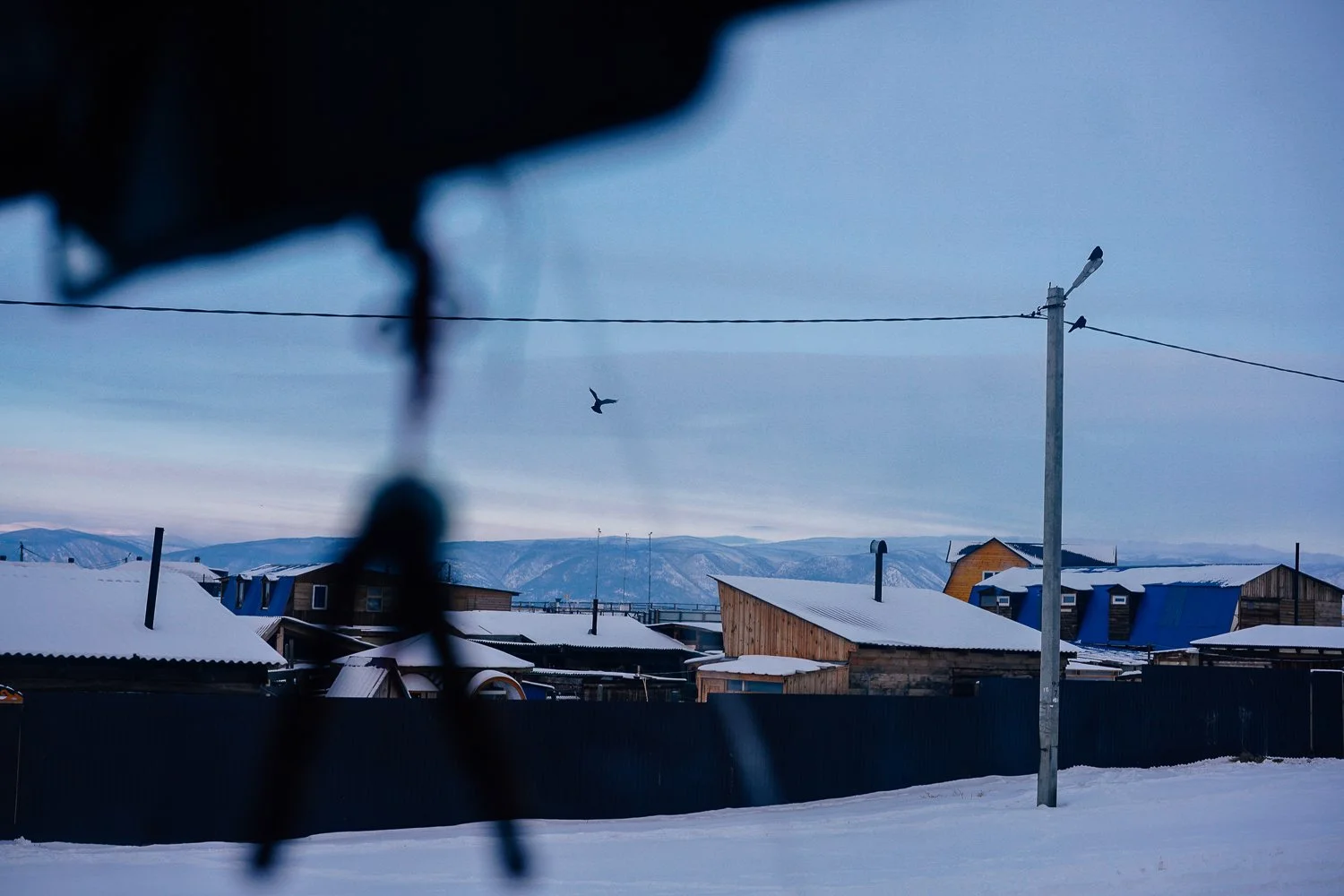
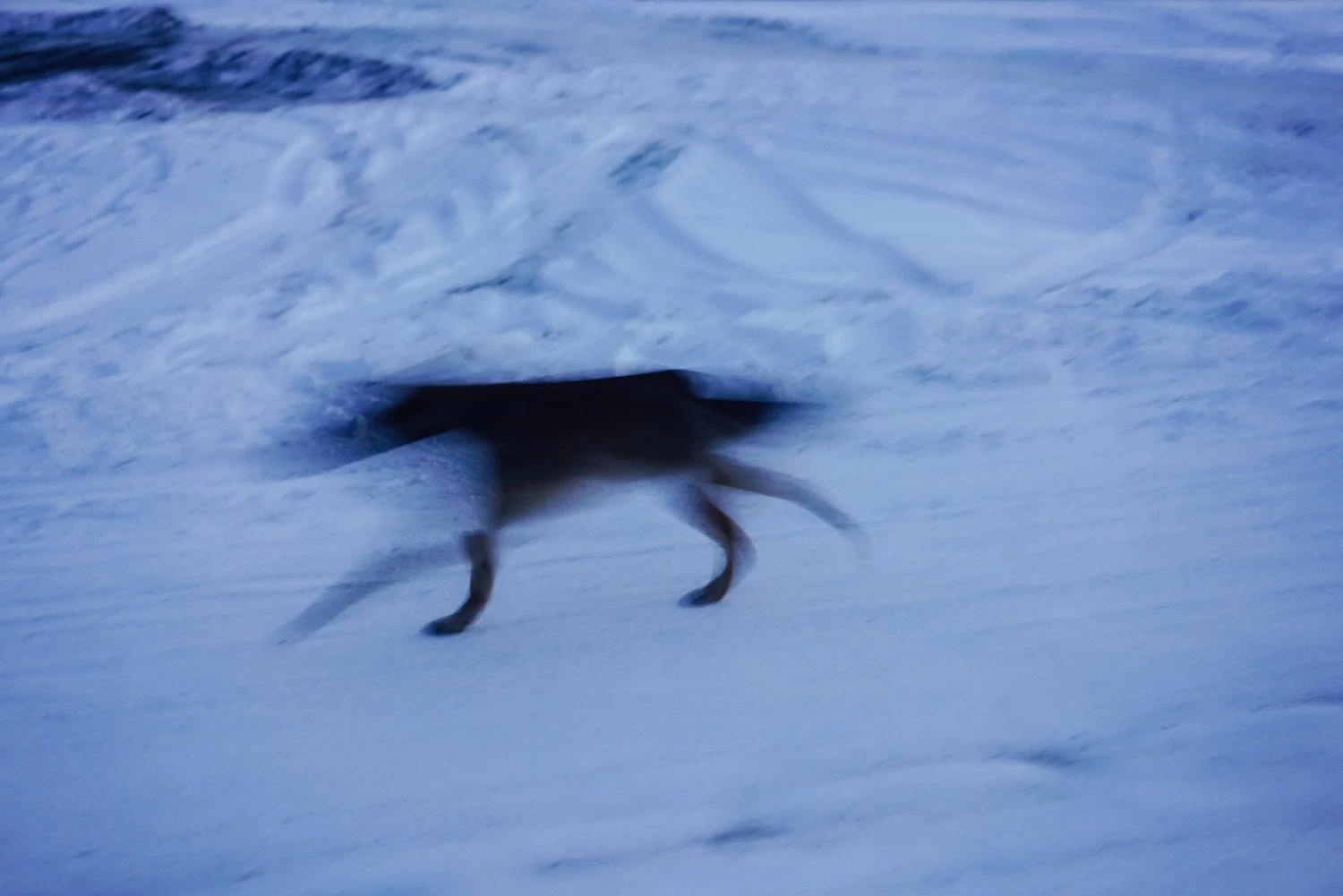
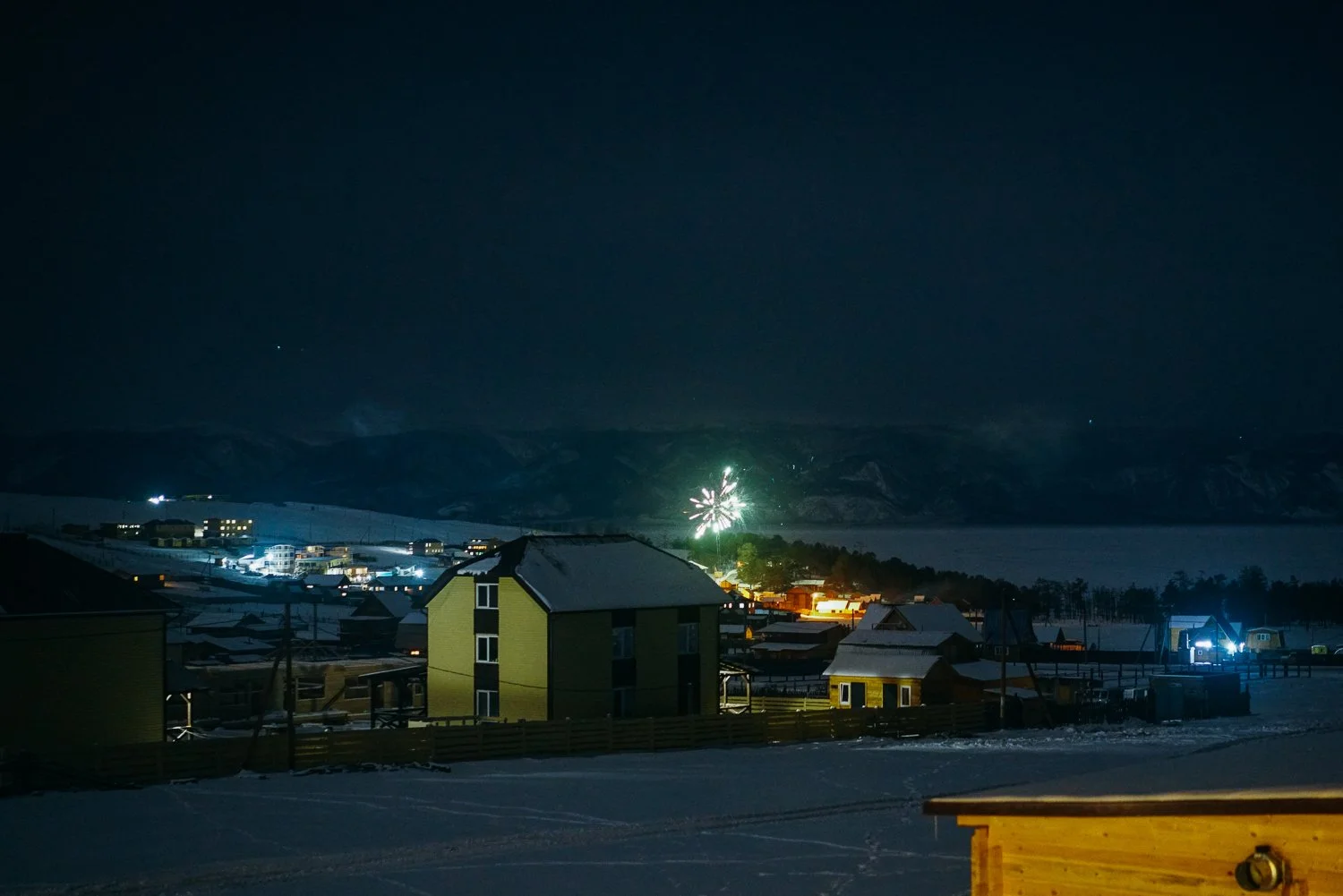
Smoke rose from some of the houses, dancing wildly in the wind. A few homes glowed brighter than others. In the distance, an occasional bark of a dog broke the silence. Otherwise, the only sound in the world was the crunch of footsteps on snow—hard, brittle, crisp. Far away, hazy gray mountains loomed, and beneath them lay the lake.
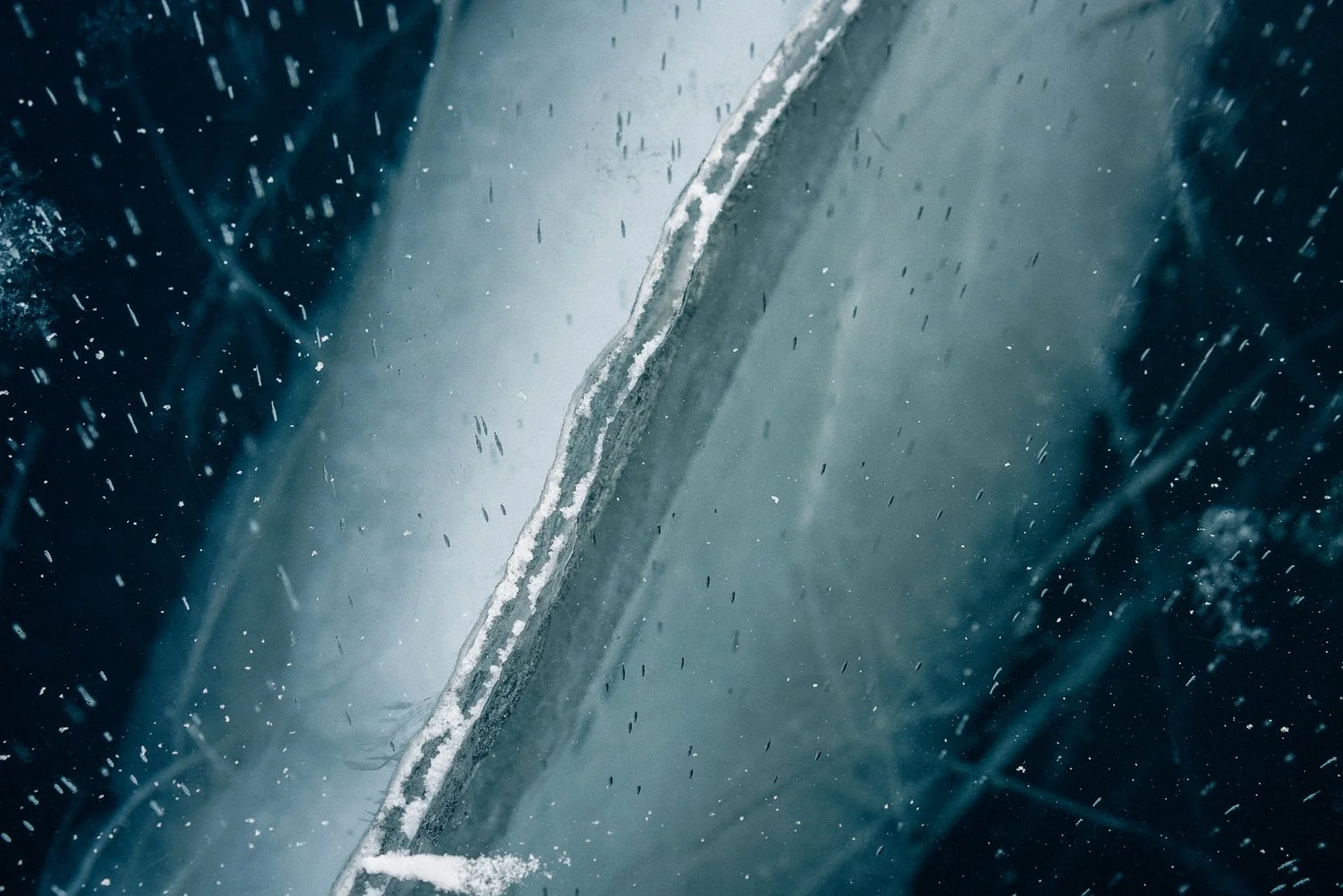
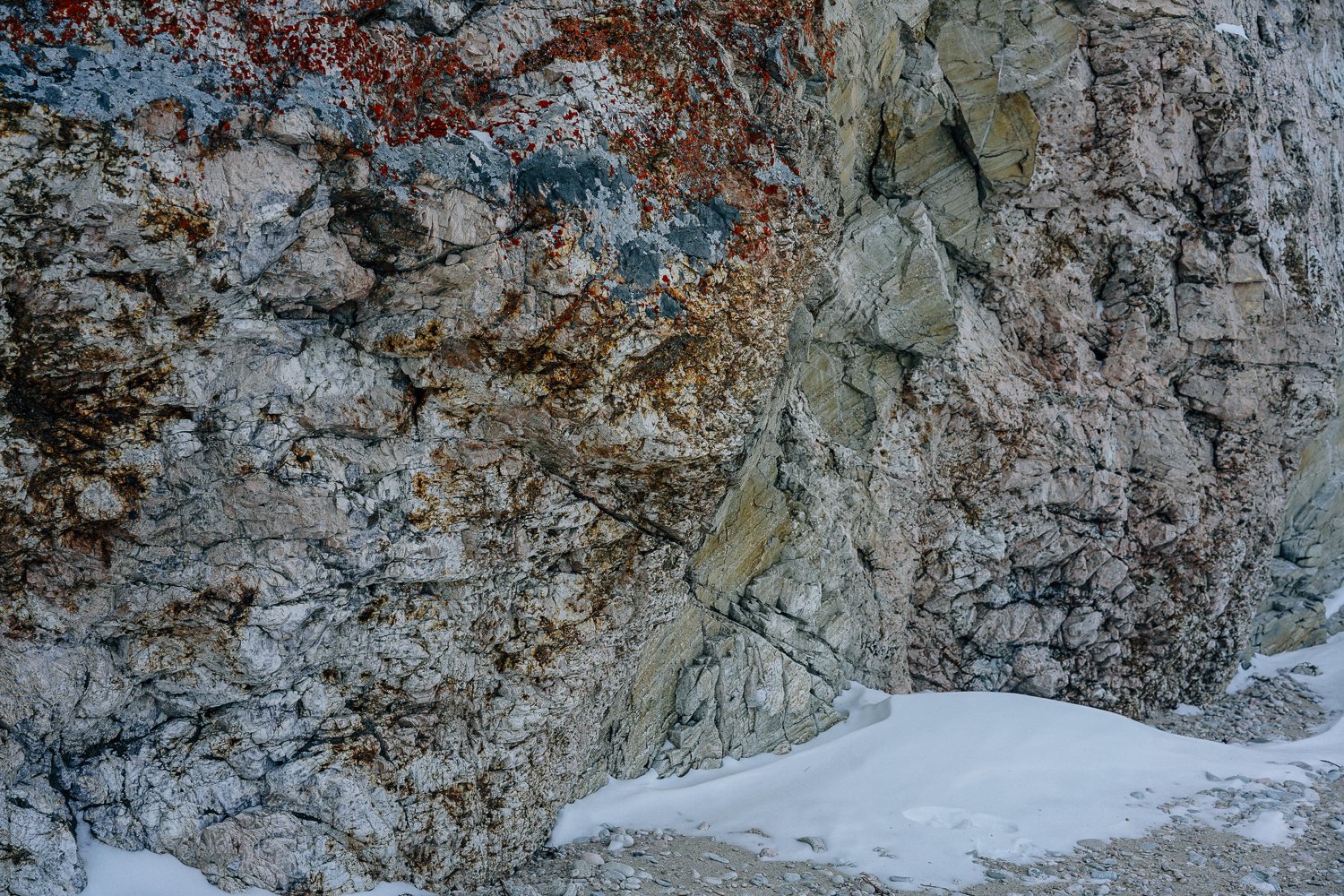
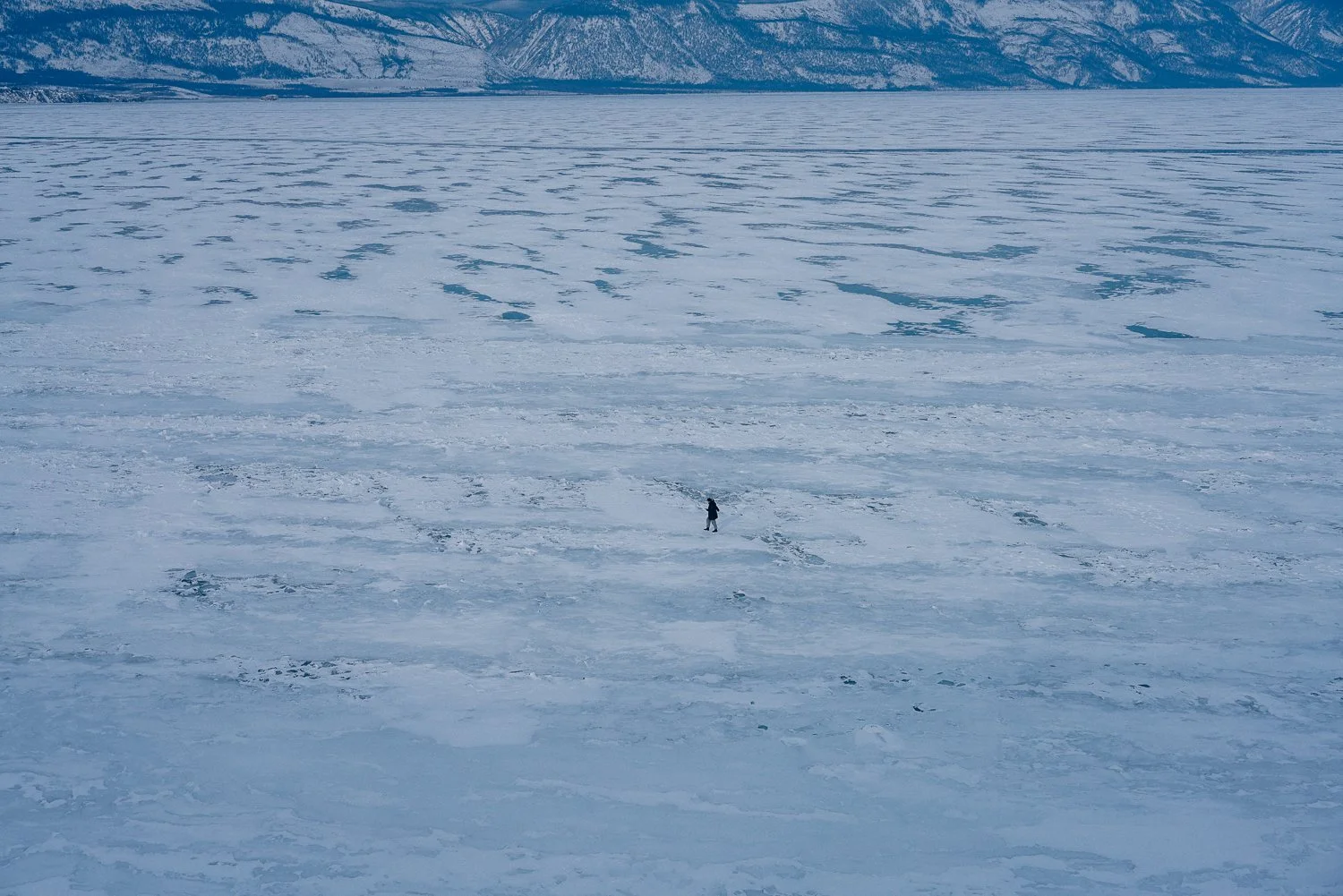
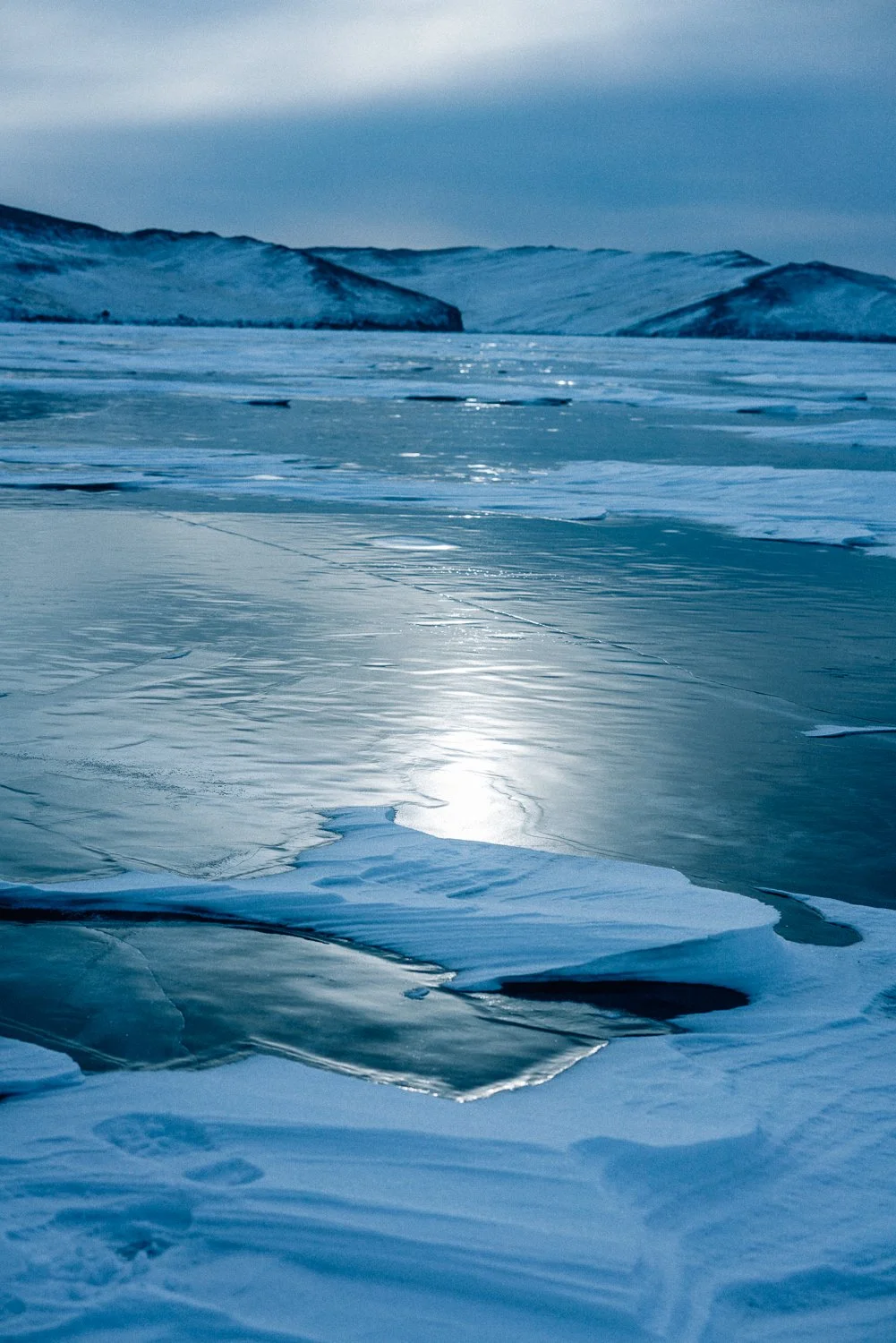
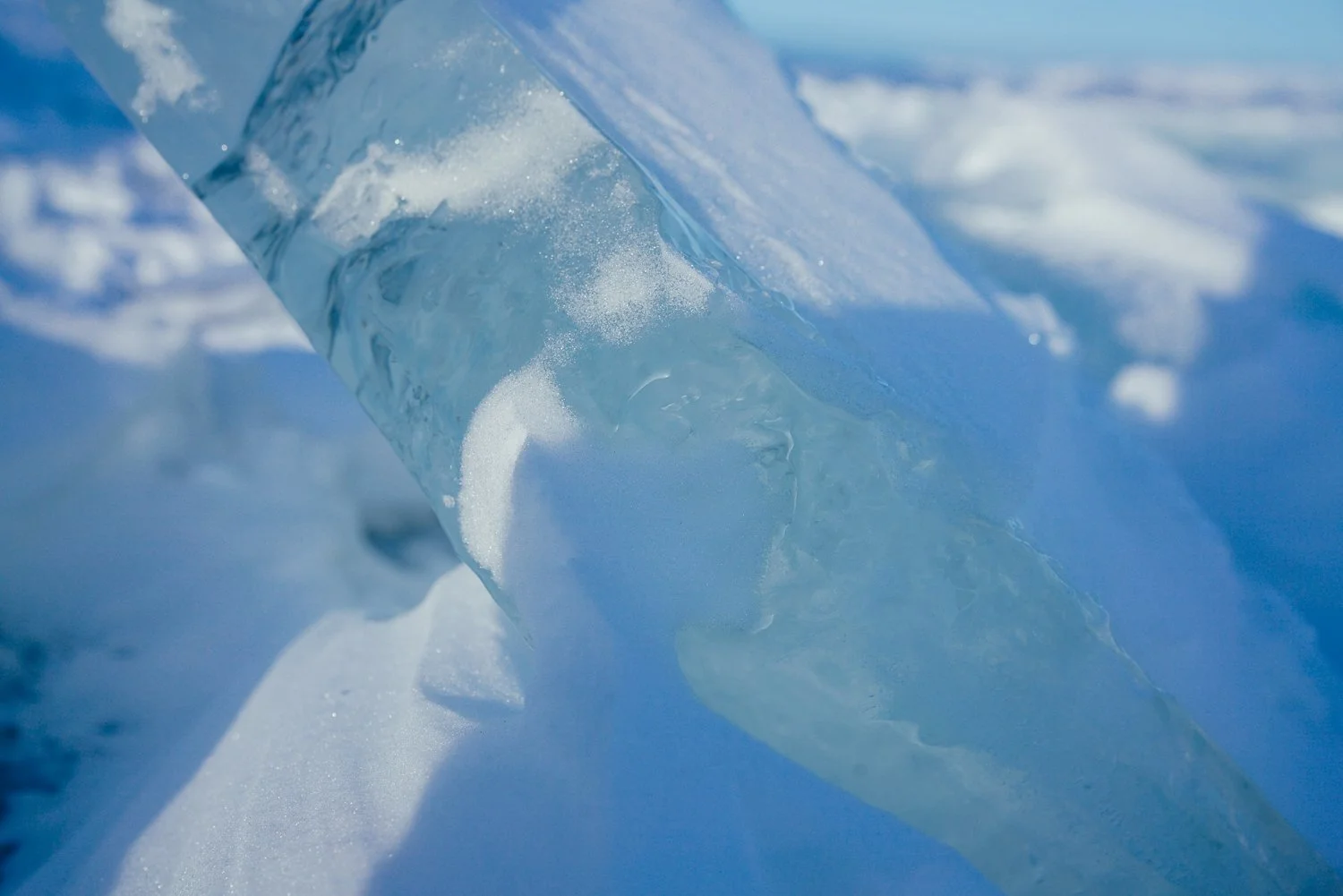
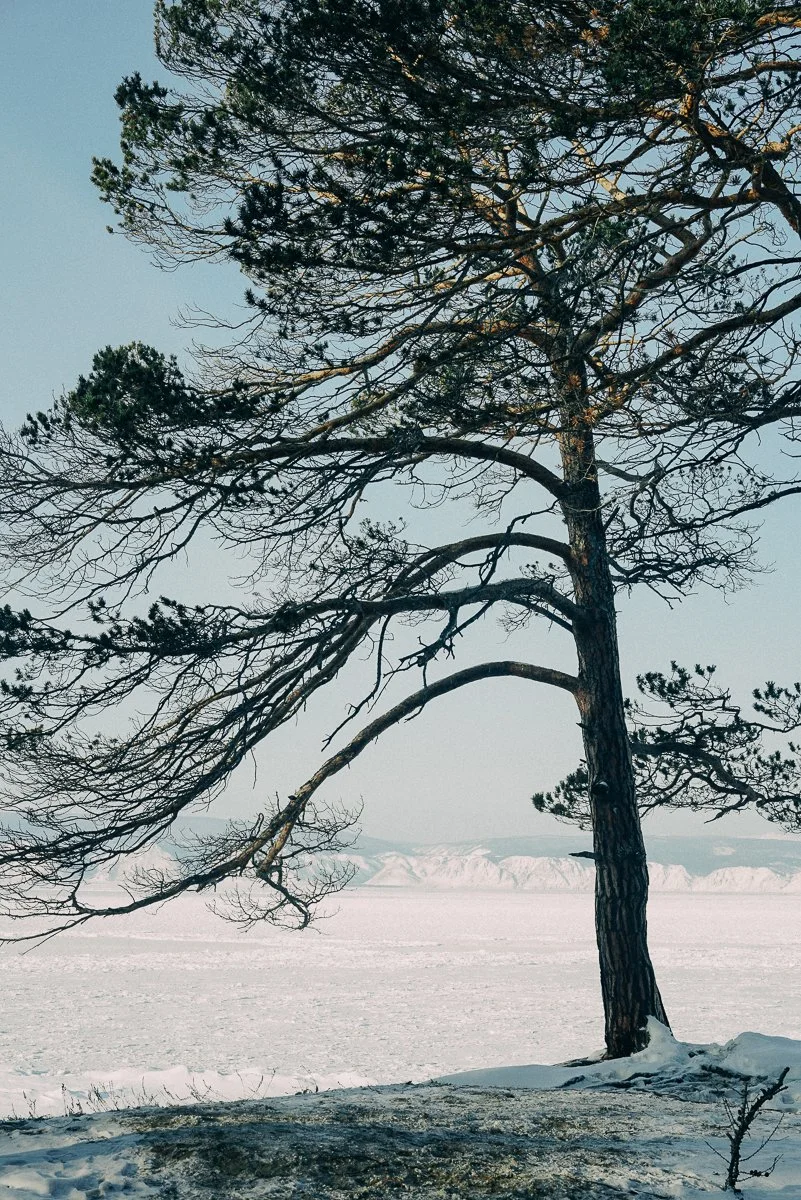
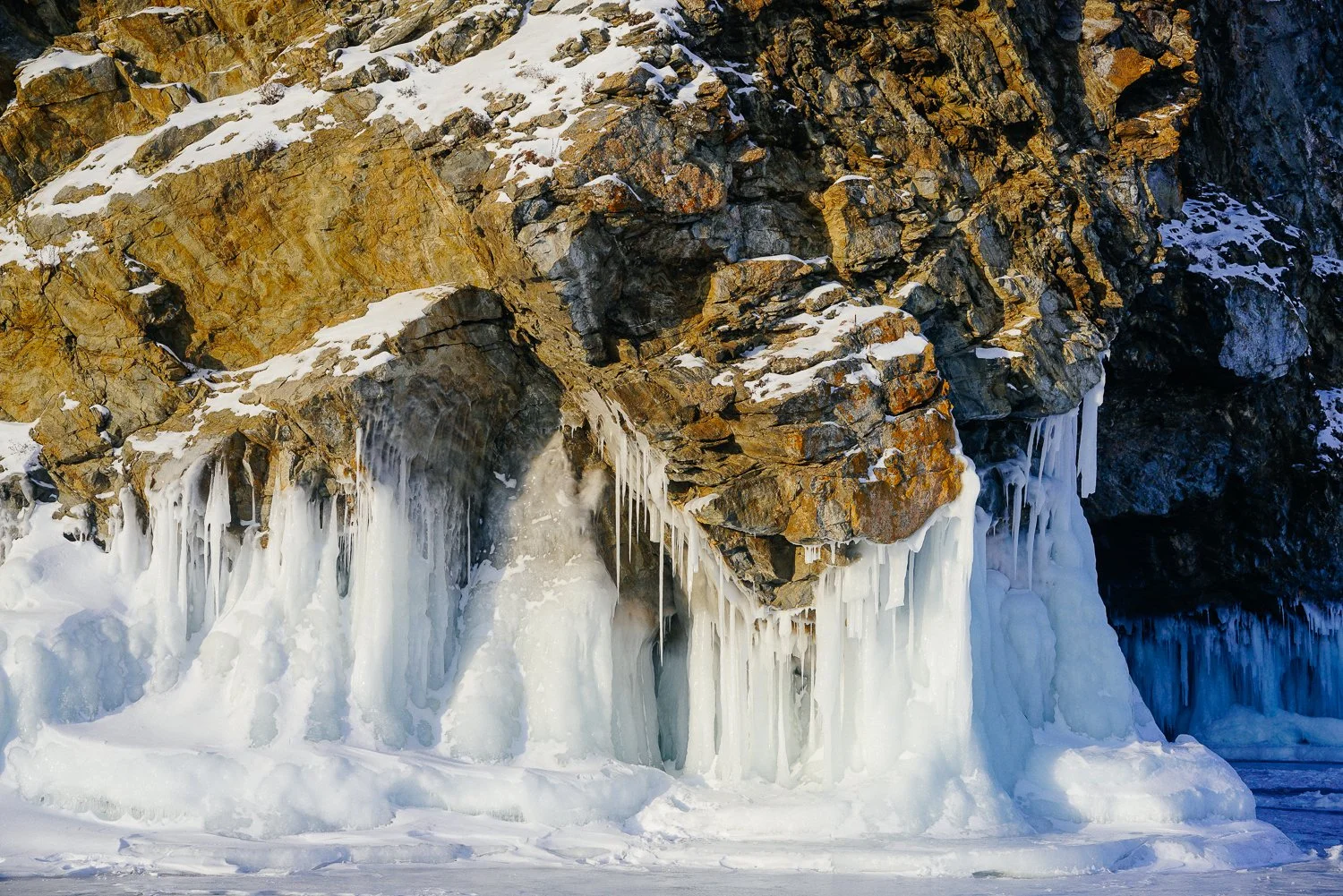
Lake Baikal naturally divides the route into northern and southern passages, accessible only by car. Along the way there are no toilets, no restaurants. The southern mountains display a gentler variety of scenery, with patches of blue ice interspersed among them. By February, the blue ice becomes deeper, more intense in color. The northern landscapes are wilder and more vast, with large expanses of icicles, rime frost, and fierce, biting winds. Cars often climb and descend slopes at angles approaching ninety degrees.
At the coldest moment of this ancient terminus of the Shanxi merchants’ camel caravans, snow-covered vehicles have replaced the tea-bearing camels, yet the grandeur of nature remains unchanged. A thermos of tea, a bowl of firewood-cooked fish soup made by the driver himself, and a piece of hard bread awakened a strange sense of time—both distant and immediate at once.
To throw oneself into those cold, solitary mountains and lakes.
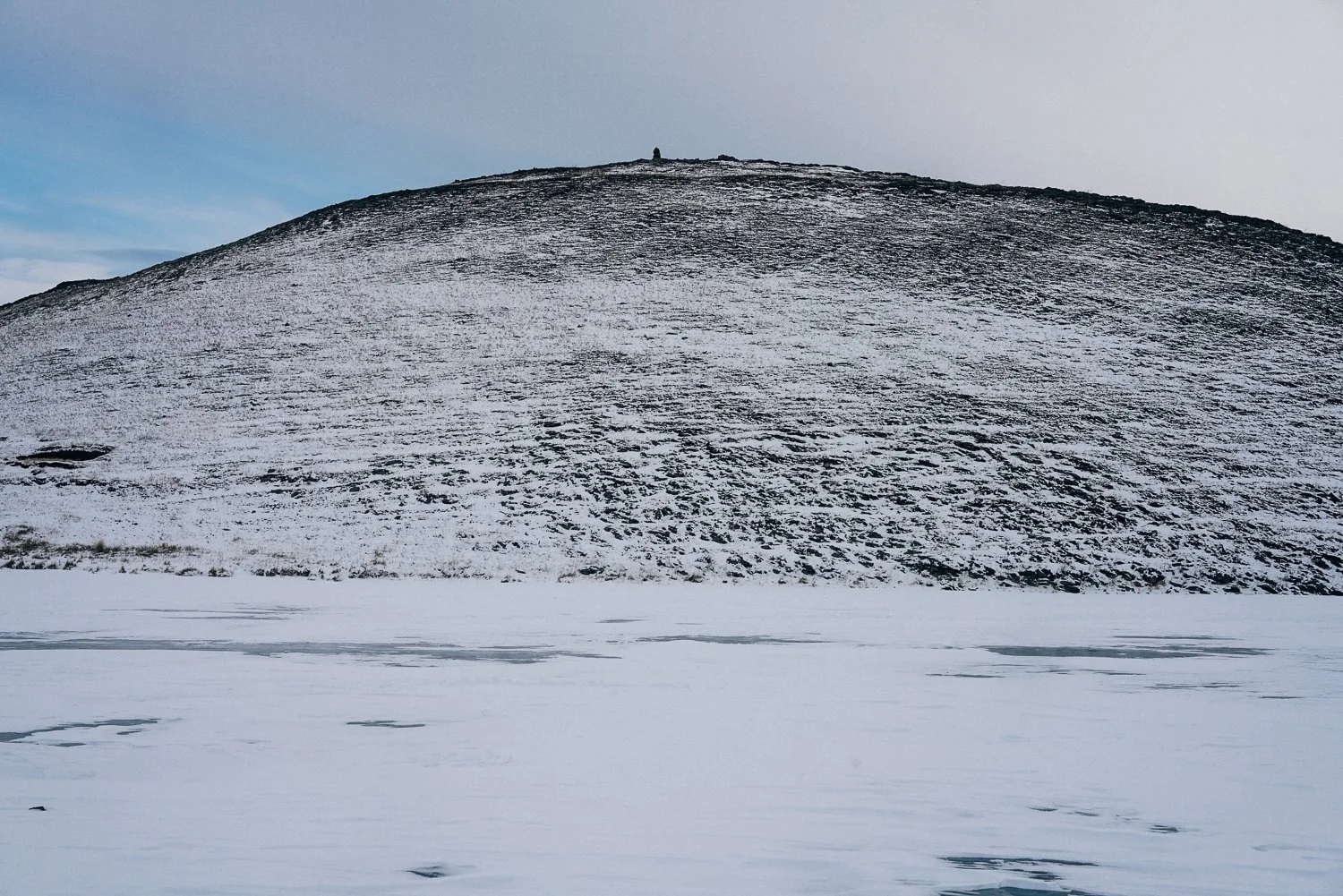
A vastness that stretches the eyes to their limits, while time dissolves entirely.
To fall completely into a primal, rough-edged landscape.
Within this sense of desolation, there is no signal on the phone; words feel unnecessary.
Silence becomes the most fitting form of reverence.
Aside from a few distant barks, the only sound in the world is the sound of footsteps moving across the snow.
When the gaze lingers long enough, the boundaries between mountain, lake, sky, and earth begin to blur.
Scattered as we are, we almost forget time itself.
Heavy snow engulfs everything.
2018年的跨年时期,我行驶在贝加尔湖畔的茶叶古道上,冰天雪地的零下三十度,对我这个南方人来说,恰恰充满了诱惑。远处孤寂坚韧的山脉、幽蓝的湖泊、被雪覆盖着的隐约露出的车道、极光色的夜晚,令人迷幻。飞往伊尔库茨克的飞机在北京转机,晚上11点半,空气里仍然混着霾,机场的成色还如以前一样。零下五度的北京让我稍稍感受到了寒冷 钻进皮肤的感觉。夜里的机场比白天安静一些,以至于所有航班起飞的播报显得格外清楚,毫无挽留人们的语气,不同的目的地把人们圈在一起然后很快又分开了。
我想象着一会就要听着各种方言或语言,在陌生人群中,闭上眼,也不知道是否能睡着,但不重要,选择上路的人应该不会担心太累,因为想要了解世界的成本除了钱,剩下的就是那副臭皮囊,练得多了也就结实了。去贝加尔湖需要先落地离它最近的城市—— 伊尔库茨克,由北京飞往伊尔库茨克的航班是凌晨5点半,大约飞行3小时就到,没有时差。
机场出租车司机的俄语神秘莫测,我们只能用肢体语言和计数器来交流。车是本田的,后窗上面也贴了一些日文传单。司机手背上有一块疤痕,脸却英俊秀气,路过博物馆的时候,他扬起那只手,指挥我必须拍下来。浏览着这座中俄茶叶之路的古老城市,也有点像是走进科恩兄弟《冰血暴》的场景,白色的雪,绿色、棕色、浅黄色的木屋,高耸萧条的树,汽车的尾气拖得很长。路上的大雪被铲到了两侧,堆得很高。
马克思大街上,每隔几根灯柱,上面就装着一个小音响,音乐仍然是上世纪90年代的社会主义感的旋律,老式的电车缓慢经过。一群年轻人在露天体育场里溜冰,线路明确,速度均衡,双腿有力,安静、自在。街上的人们都 被 皮草和大衣掩住了半张脸,也只有当女人偶尔拨动头发或摘下手套的时候能看到一些精致而华丽的金色首饰,大红色的口红与浓烈的香水让我难忘。他们面无表情的脸,像是一种似曾相识的机械性沉默。我误打误撞经过一个集市,有些人在兜售着冷冻的海鲜,不同品种的海鱼,僵硬庞大,暴露在那儿,就像这里被历史和寒冷紧紧包裹住的人。
城市被安格拉河环抱着,城市中心是基洛夫广场(Kirov Square),广场上有一棵巨型的圣诞树,孩子们玩着高高的滑梯,其中有一些是冰做成的,他们欢呼奔跑,似乎一点儿也不觉得冷,这是仅属于北方孩子的游乐场,南方的孩子无法拥有这些。沿着广场往北走是列宁纪念碑,再 往 北走是几座风格不一的东正教堂。第二天,我搭车前往贝加尔湖,从伊尔库茨克到贝加尔湖的奥利洪岛需要6小时车程。奥利洪岛位于贝加尔湖的中心,其中的胡日尔村是一个集中的居住村落,大概有1500人生活在这里。在去贝加尔湖的路上,车共停下来两次,第一次是在一个休息站。路边只有几座木屋,车辆稀少,双向道路笔直,没有尽头。
一些屋子上炊烟升起,在风的作用下肆意舞动,一些屋子的灯光比别家的亮一些。远方,偶尔几声狗吠。除此之外,世界唯一的声音,就是踩在雪地上的 步伐声,硬邦邦的、脆 脆的声音。往远看,是朦胧的灰色山脉,山脉下就是湖。贝加尔湖自然分割出南北两条行驶路线,只能驾车前往,路上没有厕所,没有餐厅。南部的山峦拥有不同的风貌,一点点蓝冰夹杂其间,到2月份的时候,蓝冰的颜色更深、更蓝。北部的景色更野性、更浩瀚。这里有大片的冰挂、雾凇和强劲凌冽的寒风。车经常以接近90度的倾角上坡下坡行驶。在这个古老晋商驼道终极 地的最冷时刻,虽然覆盖着白雪的汽车替代了茶马草驼,自然的巍峨却恒久不变。保温杯的茶、司机自己做的一碗柴火鱼汤和一片硬面包,才唤起了一丝奇妙的时间之感。
把自己丢进那一片雪白而寒冷,孤寂却坚韧的山脉,冰湖,夜晚,望眼欲穿的开阔。
时间却消失殆尽。
赤裸裸地坠入原始而粗粝的境地。
在这样的荒凉感之下,手机没有信号,说话显得多余,沉默是最好的敬畏方式。除了几声狗吠,世界唯一的声音,就是行径在雪地上的声音。
当凝视地久了,山与湖与天地的边界开始模糊,散落的我们也几乎都忘记了时间。
冷,的确比热要更坚硬和内化一些,这或许就是自然给予不同地区的人们不同的生存方式。
大雪把一切都淹没了。
Video - The Frozen Days 05’12’’